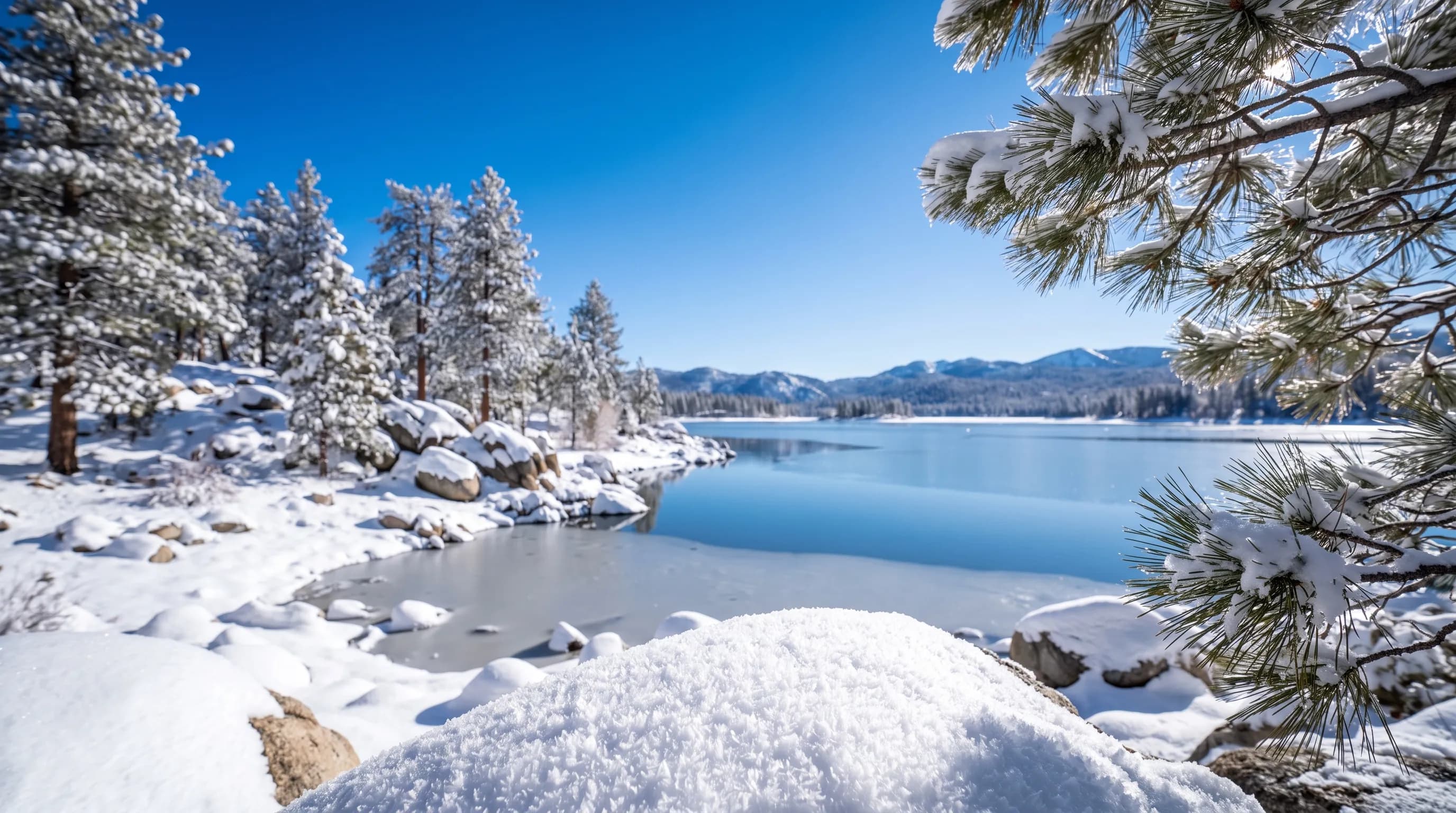
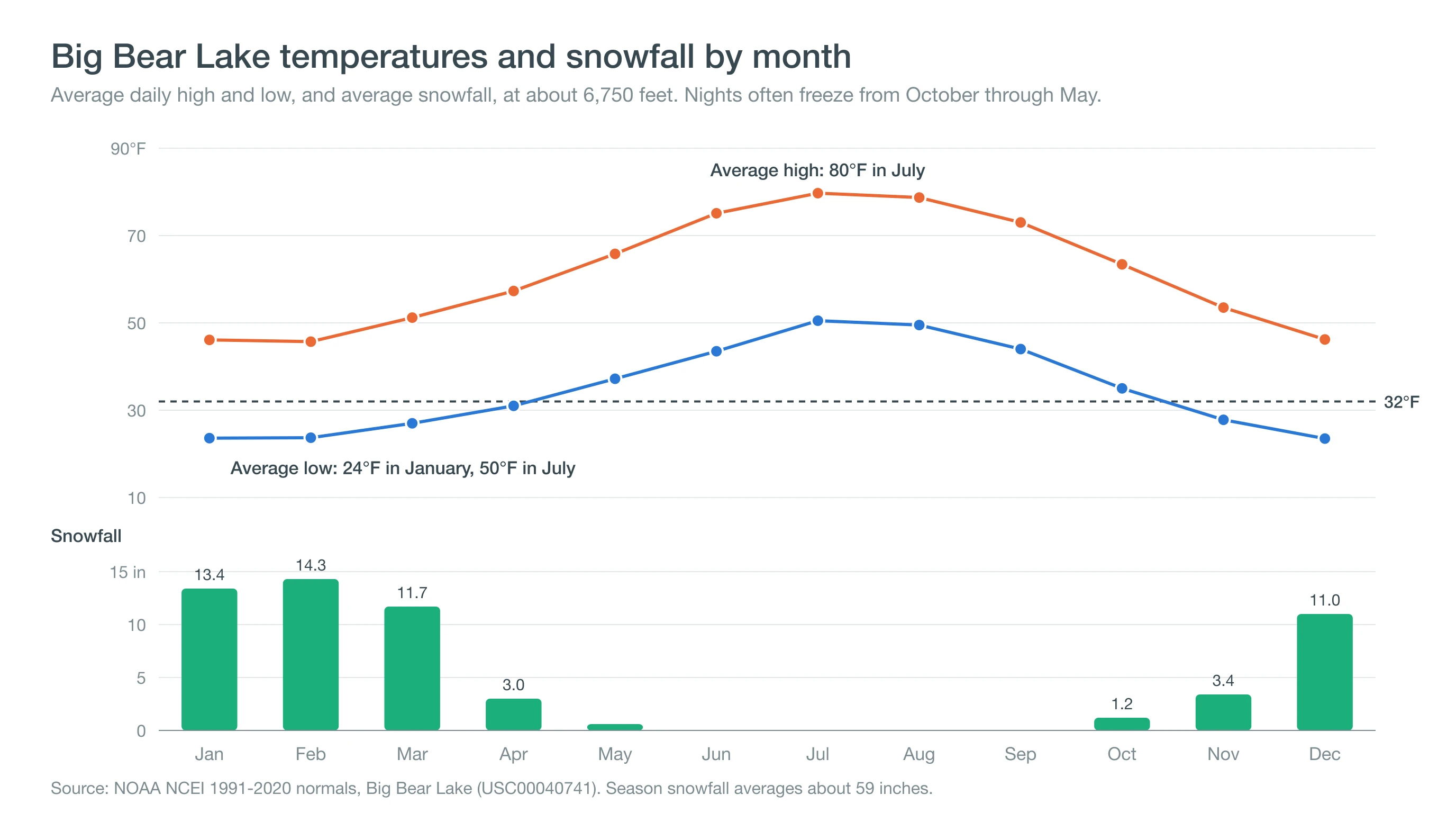
Big Bear Lake has cold, snowy winters and warm, dry summers. January averages highs near 46°F and lows near 24°F, with about 13 inches of snow. July averages about 80°F by day and 50°F at night.
The town gets about 59 inches of snow in an average season, mostly from December through March, and nights fall below freezing about 176 times a year, from October into May. Summer afternoons bring occasional thunderstorms.
Big Bear is about two hours from the beach but has a very different climate. At about 6,750 feet in the San Bernardino Mountains, the air is thin and dry, so it swings about 30 degrees between afternoon and night in every season. A July afternoon near 80°F is followed by a night near 50°F, and in June you can still wake up to frost. Pack for Big Bear as if you were traveling somewhere much colder.
What Is the Weather Like in Big Bear Each Month?
Big Bear has winter from December to March, a long, cool spring, a short warm summer and a crisp fall. The table below uses NOAA's 1991-2020 normals for the Big Bear Lake weather station, near the lake at about 6,750 feet. Precipitation includes the water in melted snow.
| Month | High / low (°F) | Snow (in) | Precipitation (in) | Freezing nights |
|---|---|---|---|---|
| January | 46 / 24 | 13.4 | 4.51 | 28 |
| February | 46 / 24 | 14.3 | 4.39 | 26 |
| March | 51 / 27 | 11.7 | 2.37 | 27 |
| April | 57 / 31 | 3.0 | 0.78 | 20 |
| May | 66 / 37 | 0.6 | 0.42 | 8 |
| June | 75 / 44 | 0 | 0.15 | 1 |
| July | 80 / 51 | 0 | 0.69 | 0 |
| August | 79 / 50 | 0 | 0.82 | 0 |
| September | 73 / 44 | 0 | 0.40 | 1 |
| October | 63 / 35 | 1.2 | 0.79 | 12 |
| November | 54 / 28 | 3.4 | 1.35 | 25 |
| December | 46 / 24 | 11.0 | 3.31 | 29 |
When Does It Snow in Big Bear?
Snow falls in Big Bear mostly from December through March, which together bring about 50 of the season's 59 inches. February is the snowiest month on average, at about 14 inches. November and April can bring real storms too, and light snow has fallen as early as October and as late as May. Natural snow varies enormously from year to year, which is why the ski resorts rely heavily on snowmaking. The details of a typical winter, and what a dry one looks like, are in does it snow in Big Bear.
The 2026-27 winter comes with an unusually strong El Niño. NOAA gives a very strong event better than 90% odds, which makes a wet Southern California winter more likely, and a wet winter usually means more mountain snow. More snow is not guaranteed: warm El Niño storms can bring rain to the lake while the peaks above get the snow. Where snow falls across the region is covered in where it snows in Southern California.
How Cold Does Big Bear Get at Night?
Big Bear gets cold at night in every season. The town drops below freezing on about 176 nights a year, nearly every night from November through March, about two-thirds of April nights and more than a third of October nights.
Even June and September average about one freezing night each. Winter lows near 24°F are routine, and cold snaps push them into the single digits. The station's record is -15°F, set on November 19, 1964.
Thin, dry mountain air lets the day's heat escape quickly after sunset, which is why the daily swing runs about 30 degrees even in summer. For cabins, bring slippers and an extra blanket. For camping, pack a sleeping bag rated to at least 30°F from May to October and much colder the rest of the year, plus a warm hat for the evening.
What Is Summer Like in Big Bear?
Summer in Big Bear is warm, dry and sunny, with highs near 80°F in July and August and cool nights near 50°F. The heat record is 98°F, set on June 30, 1994, but most summer afternoons are far milder than the deserts below or the valleys of Los Angeles. June is the driest month of the year. July and August are wetter, at 0.69 and 0.82 inches, because monsoon moisture builds afternoon thunderstorms over the mountains.
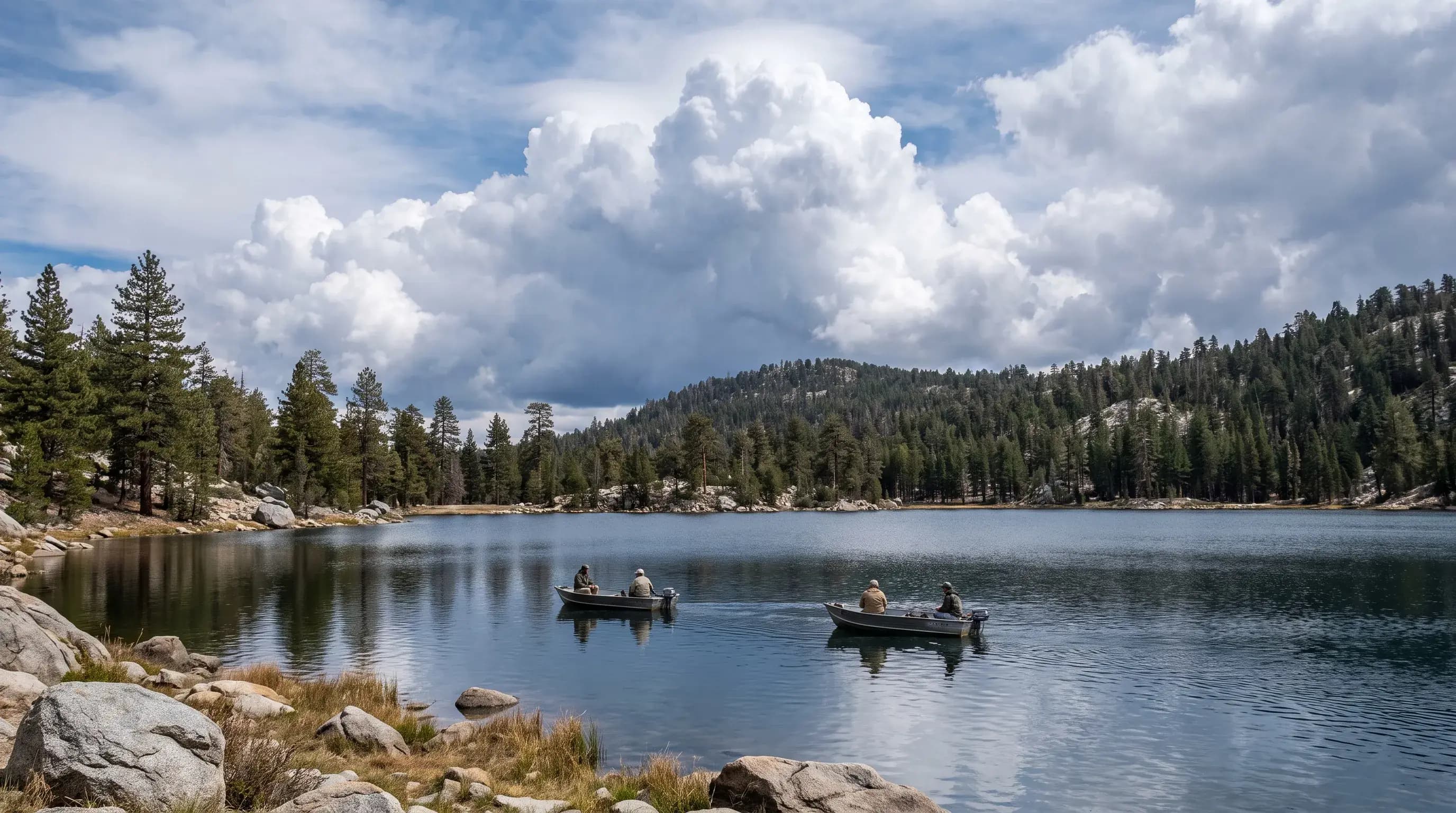
Plan boating, biking and summit hikes for the morning, and head in when you first hear thunder. The lightning safety guide explains what to do if a storm catches you outdoors, and how rare LA thunderstorms are explains why the mountains get them far more often than the city. Rare tropical storms also reach Big Bear: Tropical Storm Hilary dropped 3.62 inches on Big Bear Lake on August 20 and 21, 2023. The sun is stronger at this altitude, so wear sunscreen even on cool days.
When Is the Best Time to Visit Big Bear?
The best time to visit Big Bear depends on the trip. For skiing and snowboarding, go from January through March. For warm lake days, swimming and boating, go in July and August. For hiking, September is often the best month of all: dry, calm, still near 73°F by day, and past the peak of thunderstorm season.
October brings crisp days, cold nights and fall color. The shoulder months of April, May and November can swing from snow to sunshine within a week, so pack for both; the city-to-mountain checklist is in what to pack for LA by month.
How Do Winter Storms Affect the Drive to Big Bear?
Winter storms can close the drive to Big Bear quickly and sometimes severely. In late February 2023, the National Weather Service issued blizzard warnings for the Southern California mountains, the Los Angeles office's first since 1989 and the San Diego office's first ever, with forecasts of up to 6 feet of snow for Big Bear. Mountain highways closed for days, and residents were snowed in. Even ordinary storms bring chain controls, which require drivers to carry or install chains unless their vehicle qualifies for an exemption.
Before a winter trip, check Caltrans road conditions and the National Weather Service in San Diego, which covers the San Bernardino Mountains, and read what winter weather alerts mean. Then check the hourly forecast for Big Bear Lake and nearby Big Bear City, and pack for a night colder than you expect.