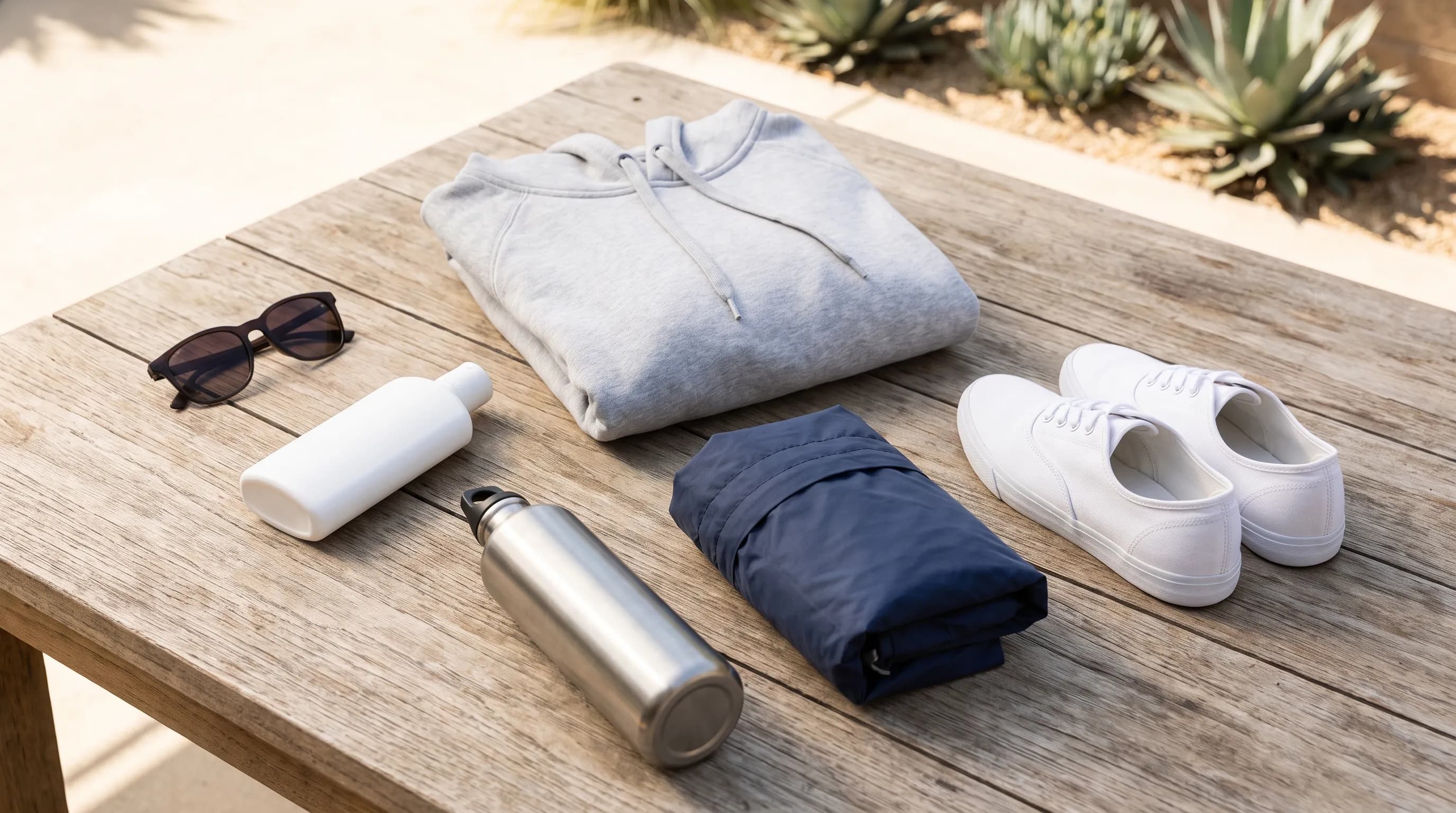
Pack layers for Los Angeles in every month. Days are mild to warm, but coastal evenings are cool, with lows from about 48°F in winter to 63°F in summer, and inland neighborhoods swing 25 to 35 degrees between afternoon and night. Add a compact rain jacket from December to March, strong sun protection from April to October, and real winter gear if your trip includes the mountains.
Many visitors pack only shorts for sunny Los Angeles and end up buying a hoodie on the Santa Monica Pier at sunset. The average August night at the beach is 63°F with an ocean breeze, and the midday UV index that month averages about 10. In LA, pack for the time of day and the neighborhood, not just the season.
What Should You Pack for Los Angeles in Any Month?
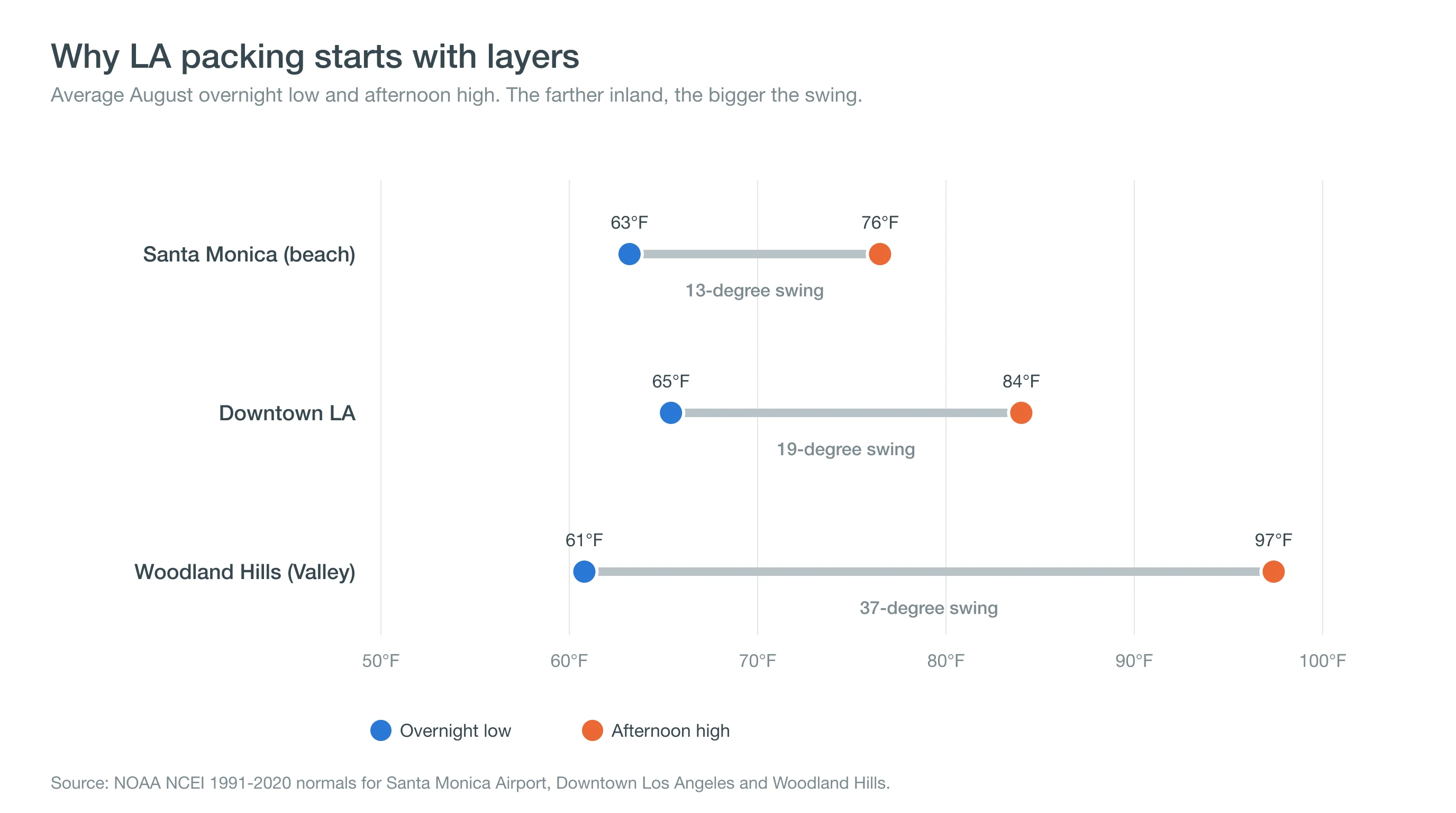
Pack layers, sun protection and comfortable walking shoes for Los Angeles in any month. Two temperature swings matter most: coast versus inland, and afternoon versus night. On an average August day, Santa Monica changes about 13 degrees from night to afternoon, Downtown about 19, and Woodland Hills in the San Fernando Valley about 37.
A plan that runs from a Valley morning to a beach sunset covers most of that range in one day. The microclimates explainer shows why.
| When | What to pack |
|---|---|
| December-February | Light sweater or fleece, compact rain jacket, closed shoes; winter coat, gloves and chains for Big Bear |
| March-April | Layers, a light rain shell early in the season, sunscreen as the UV climbs |
| May-June | Hoodie for gray coastal mornings, sunglasses and SPF for bright afternoons |
| July-September | Summer clothes, hat, SPF 30 or higher, water bottle, swimwear, one layer for beach evenings |
| October | Summer clothes plus a light jacket; be ready for heat spells and dry wind |
| November | Layers and a light rain jacket; evenings in the 50s |
| Any month | Comfortable walking shoes, reusable water bottle, a packable layer |
What to Pack for LA in Winter (December to February)
For LA in winter, pack a light sweater or fleece, a compact rain jacket and shoes that can handle a wet sidewalk. Winter days average about 67°F to 68°F Downtown, and nights drop to about 48°F, colder in the Valley at about 42°F to 43°F. Downtown sees rain on about five or six days a month from December through February, usually in a few storms rather than steady drizzle, as LA's wet-winter guide explains. A rain jacket usually works better than an umbrella: storms often come with wind, and some venues restrict umbrellas.
What to Pack for LA in Spring (March to May)
For LA in spring, pack layers and sunscreen. Highs climb from about 70°F in March to the mid-70s by May Downtown, but UV rises faster: the average midday UV index rises from about 6 in March to about 9 in May. Late spring brings gray mornings at the coast, so pack a hoodie for a morning beach walk and sunglasses for the afternoon, when the clouds usually clear. The gray season is explained in May Gray and June Gloom.
What to Pack for LA in Summer (June to September)
For LA in summer, pack summer clothes, a wide-brimmed hat, sunscreen of SPF 30 or higher and a refillable water bottle. The average midday UV index runs about 10 to 11 from June through August, high enough to burn in well under an hour, as the LA UV index guide explains. Also plan for inland heat: Woodland Hills averages about 97°F in August, and theme parks and hiking trails away from the coast get hot by midday.
Pack swimwear from late July on, when the ocean warms to about 69°F to 70°F. Earlier in the summer the water is cooler, near 66°F in June. Keep one layer in your bag for beach evenings, which cool into the low 60s with a breeze, and for night games: a Dodgers game in August starts near 75°F and ends near 70°F.
What to Pack for LA in Fall (October and November)
For LA in fall, pack summer clothes plus a light jacket in October, and more layers in November. October is often the year's best weather, but it can also bring heat waves and dry Santa Ana winds that push inland highs into the 90s or higher; the October guide covers both. By November, highs average about 73°F Downtown and nights fall to the low 50s, with the first real storms of the season, so add a light rain jacket.
What Extra Gear Do You Need for Mountain, Desert or Stadium Trips?
Mountain, desert and stadium trips need more gear than a Los Angeles city visit. Two hours from Downtown, the weather changes completely:
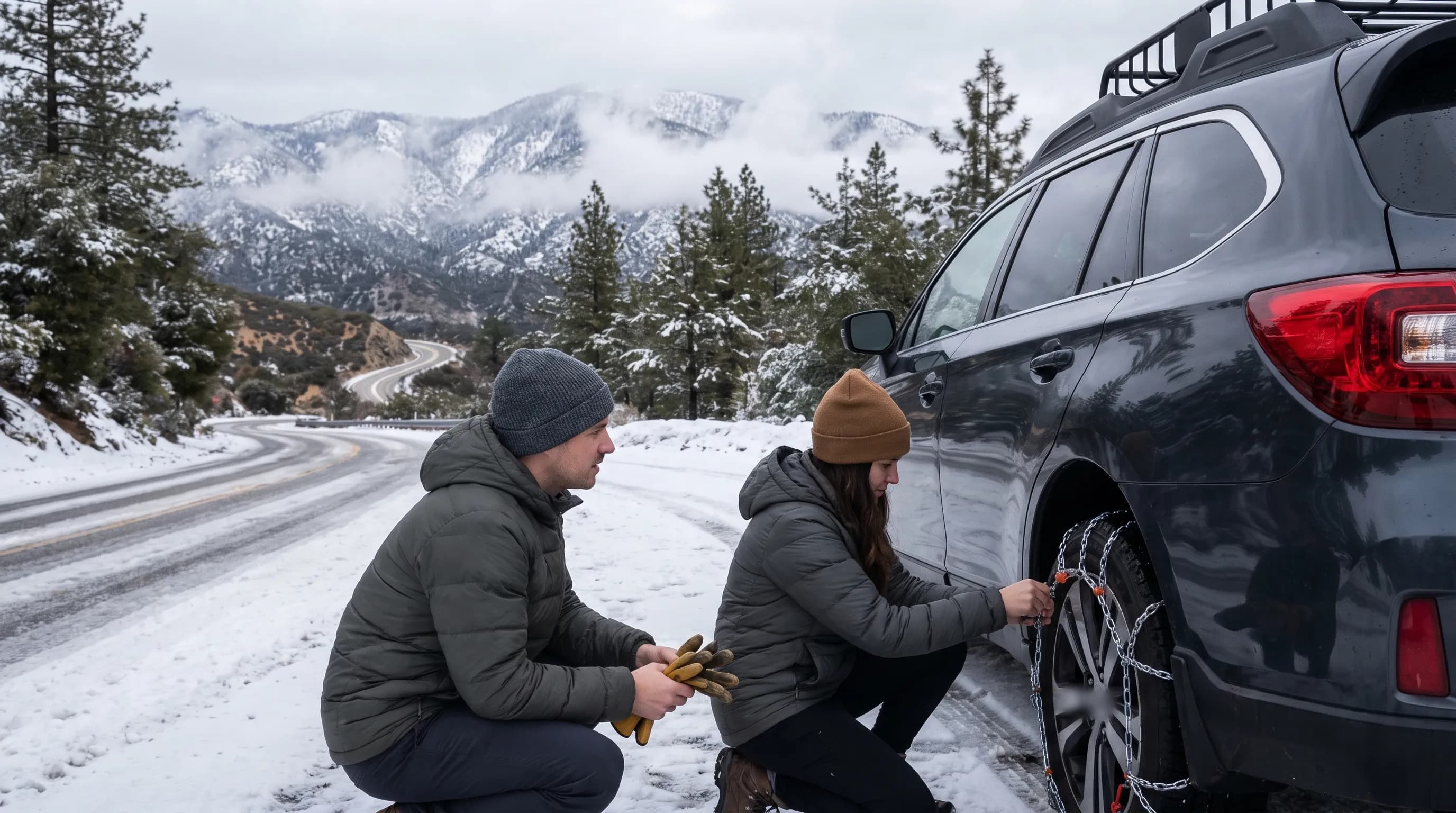
- Big Bear and the mountains: in winter, a warm coat, gloves, a hat, waterproof boots and chains or traction devices for the car, since January lows average about 24°F. In summer, layers for nights near 50°F and a rain shell for afternoon thunderstorms. See Big Bear Lake weather by month and where it snows in Southern California.
- Palm Springs and the desert: a sun hat, lightweight long sleeves, extra water and electrolytes, and plans for early starts, since July highs average about 109°F. See Palm Springs weather by month.
- Stadiums and outdoor events: a clear bag, a poncho instead of an umbrella, and a layer for night events. Dodger Stadium bans umbrellas; SoFi Stadium allows only small collapsible ones that fit in its clear bag. See SoFi Stadium weather.
The simplest rule for Los Angeles is to dress for the warmest part of your day and carry something for the coolest part. Before you pack, compare the hourly forecasts for Santa Monica, Downtown and Woodland Hills on the days you will be there, and check the National Weather Service for heat, wind or storm alerts.