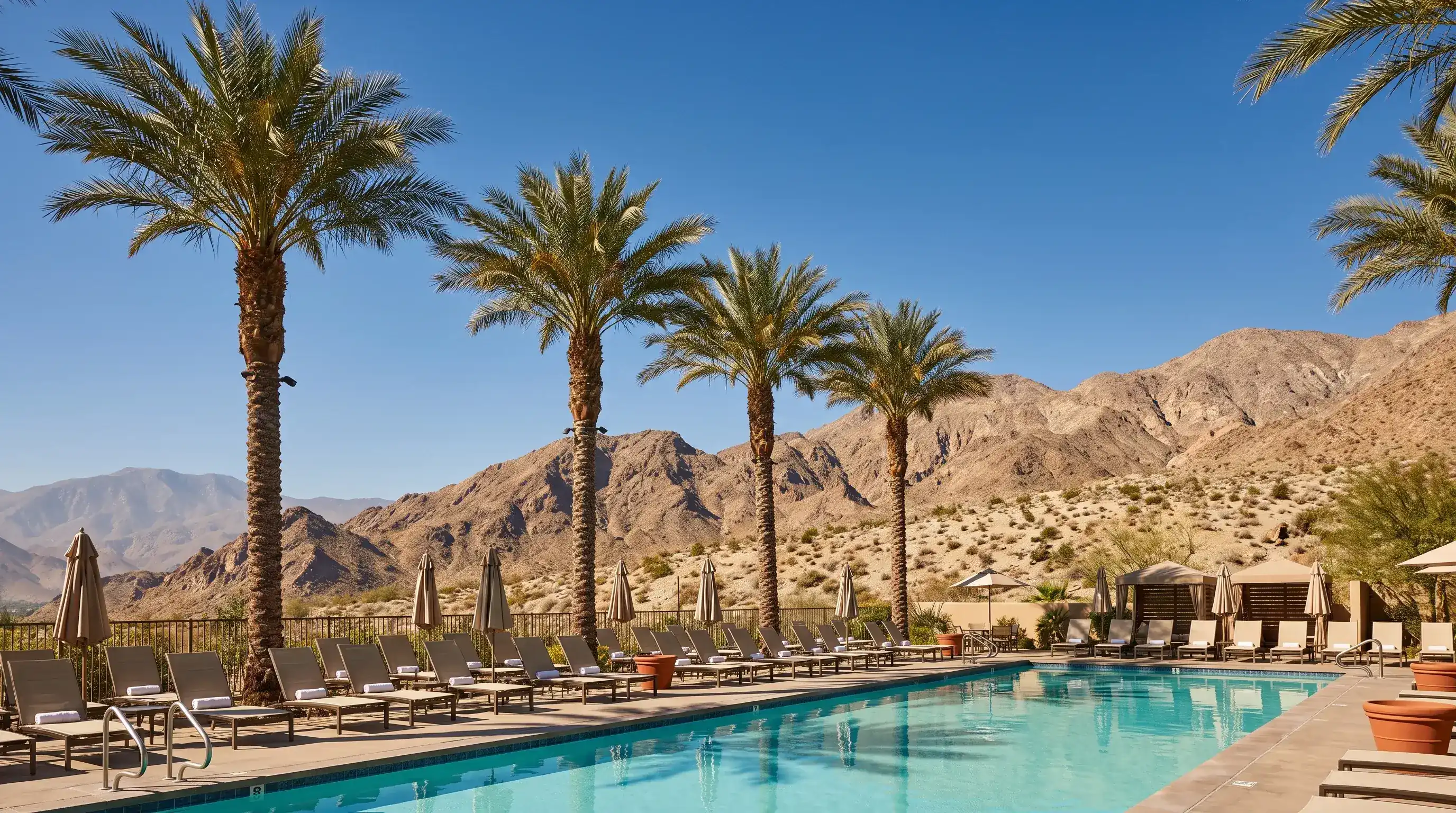
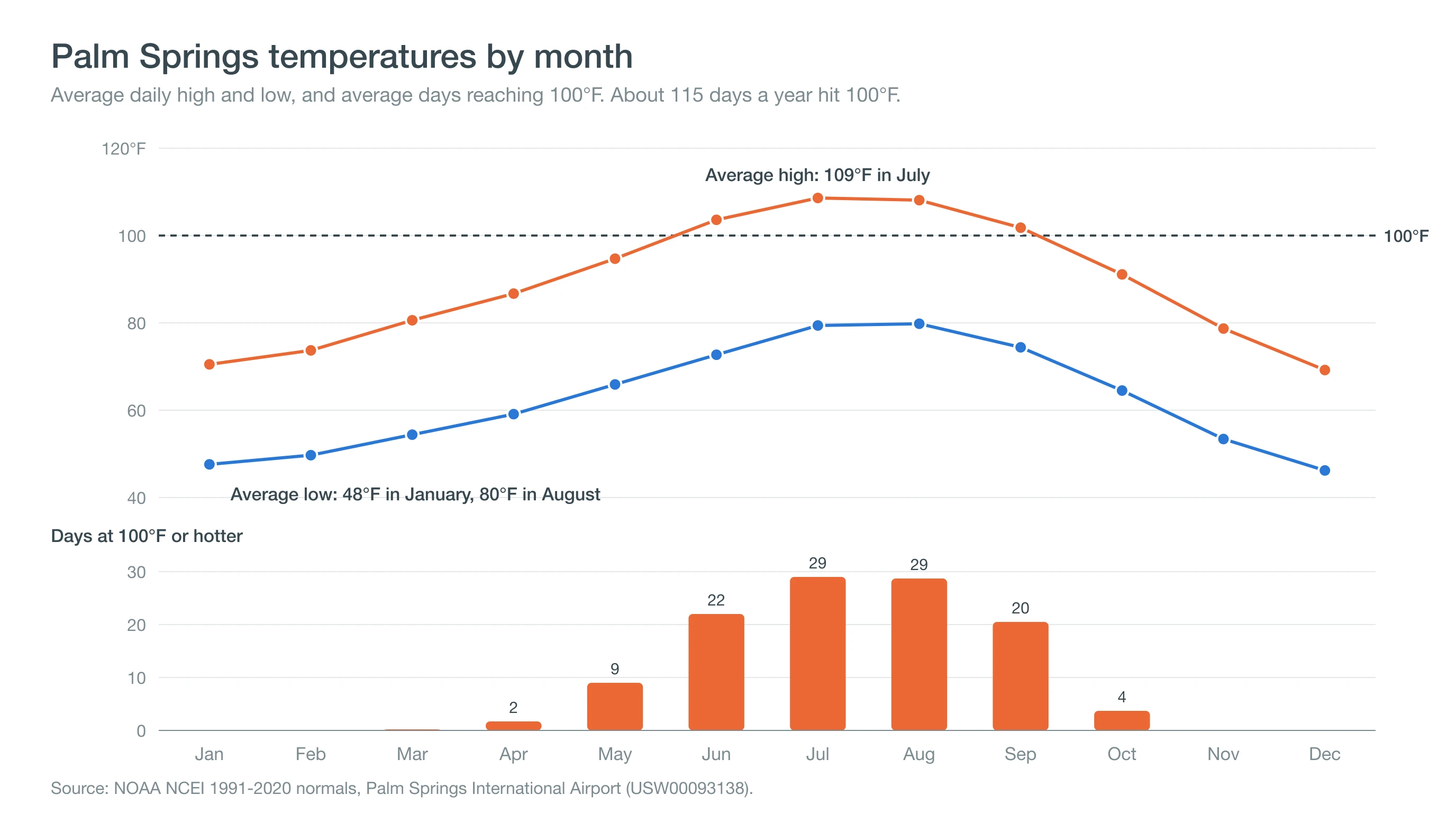
Palm Springs is warm and dry most of the year. January averages highs near 70°F and lows near 48°F, while July and August average about 108°F to 109°F by day and 80°F at night.
About 115 days a year reach 100°F. Nearly all of the 4.6 inches of yearly rain falls in winter. For most visitors, the best months are October through April, and March, April and November are best for pool weather.
In 2024, Palm Springs hit 110°F on 83 days and reached 124°F on July 5, the hottest reading in the airport's record, which starts in 1998. Six months later, a typical January afternoon was 70°F under a blue sky. Palm Springs has two very different seasons, so timing a trip matters.
What Is the Weather Like in Palm Springs Each Month?
Palm Springs weather is mild and sunny from November to April, hot in May and October, and extreme from June through September. The desert is this hot and dry because it sits in the rain shadow of the San Jacinto and San Bernardino mountains. Those mountains squeeze moisture out of Pacific storms before they arrive and block the ocean air that keeps Los Angeles mild.
| Month | High / low (°F) | Rain (in) | Days at 100°F+ |
|---|---|---|---|
| January | 71 / 48 | 1.14 | 0 |
| February | 74 / 50 | 1.11 | 0 |
| March | 81 / 54 | 0.51 | 0 |
| April | 87 / 59 | 0.09 | 2 |
| May | 95 / 66 | 0.02 | 9 |
| June | 104 / 73 | 0.00 | 22 |
| July | 109 / 79 | 0.25 | 29 |
| August | 108 / 80 | 0.14 | 29 |
| September | 102 / 74 | 0.24 | 20 |
| October | 91 / 65 | 0.20 | 4 |
| November | 79 / 53 | 0.23 | 0 |
| December | 69 / 46 | 0.68 | 0 |
NOAA 1991-2020 normals, Palm Springs International Airport.
When Is the Best Time to Visit Palm Springs?
The best times to visit Palm Springs are March and April, and late October through November. Highs in the upper 70s to upper 80s make for warm pool days without dangerous heat, and nights are comfortable. January and February are cooler, around 70°F by day and in the 40s at night, which suits golf, hiking and sightseeing better than swimming. May and early October are already hot, with highs in the 90s and the first or last 100°F days of the season.
Festival season falls in this mild window, but some festival days are hot. The Coachella and Stagecoach festivals in nearby Indio run in April, when highs average about 87°F in Palm Springs, and a spring heat wave can push afternoons past 100°F. Carry water and plan shade breaks.
How Hot Does Palm Springs Get in Summer?
Palm Springs gets hotter in summer than most visitors can imagine. The normal July high is about 109°F, and about 115 days a year reach 100°F. Recent summers have been even hotter: the airport logged 151 days at 100°F or more in 2020 and 135 in 2024, when 83 days reached 110°F and 28 reached 115°F. The record is 124°F on July 5, 2024, one degree above 123°F on June 17, 2021.
Summer nights surprise many visitors. July and August lows average about 80°F, and the warmest nights on record never dropped below 95°F, on July 7, 2018 and September 6, 2024. Dry desert air cools quickly after sunset in winter, but in summer the ground, rock and pavement hold so much heat that there is little relief before dawn. Hike only at sunrise, never at midday, carry far more water than you think you need, and read why wet-bulb temperature matters and what causes a heat wave before a summer trip.
Is Palm Springs Cold in Winter?
Palm Springs is not cold in winter by day. December and January highs average about 69°F to 71°F, with plenty of sun. Nights are cool, in the mid-40s on average, and a jacket is welcome after dark. Freezes are rare: the airport's record low is 24°F, set on January 14, 2007, and the next coldest readings are 32°F.
Snow falls on Mount San Jacinto, 10,834 feet above town, but almost never on the desert floor, as does it snow in Palm Springs explains.
Does It Rain in Palm Springs?
Rain is rare in Palm Springs. The airport averages 4.61 inches a year, with January and February the wettest months at about 1.1 inches each. Summer brings a different kind of rain: monsoon thunderstorms from July to September can drop heavy rain on the mountains and send floodwater through normally dry washes.
The biggest recent example was Tropical Storm Hilary, which dropped 3.18 inches at the airport on August 20, 2023, most of a normal year's rain in a day. The risks are covered in flash flooding in Palm Springs.
How Can You Escape the Heat on a Summer Visit?
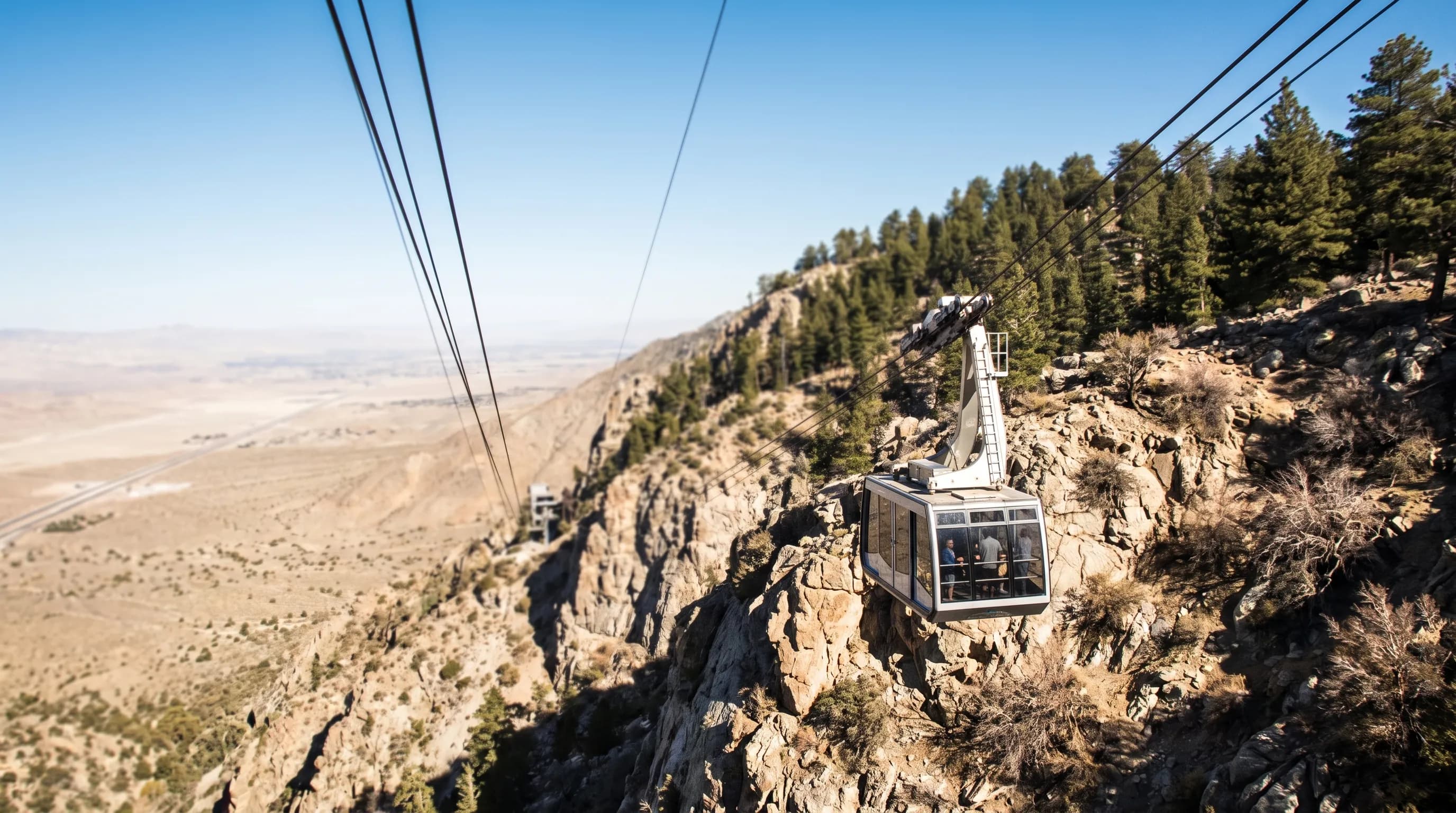
The best way to escape the heat on a summer visit to Palm Springs is to go up. The Palm Springs Aerial Tramway climbs from its Valley Station at 2,643 feet to the Mountain Station at 8,516 feet in about 10 minutes, into pine forest on Mount San Jacinto. That is roughly 8,000 feet above the airport, and air cools with height, so the top often runs around 30 degrees cooler than the desert floor. Check the separate mountain forecast before you go, because afternoon thunderstorms build over the peaks in summer.
Back on the desert floor, swim and sightsee early, save midday for shade, air conditioning or a pool under an umbrella, and head out again after sunset. The National Weather Service in San Diego, which covers the Coachella Valley, issues extreme heat warnings when temperatures turn dangerous.
Palm Springs is best when you plan around its seasons: come in spring or fall for pool days in the 80s, in winter for sunny 70°F afternoons, and in summer only with a plan for the heat. Check the hourly forecast for Palm Springs and nearby Palm Desert before you go.