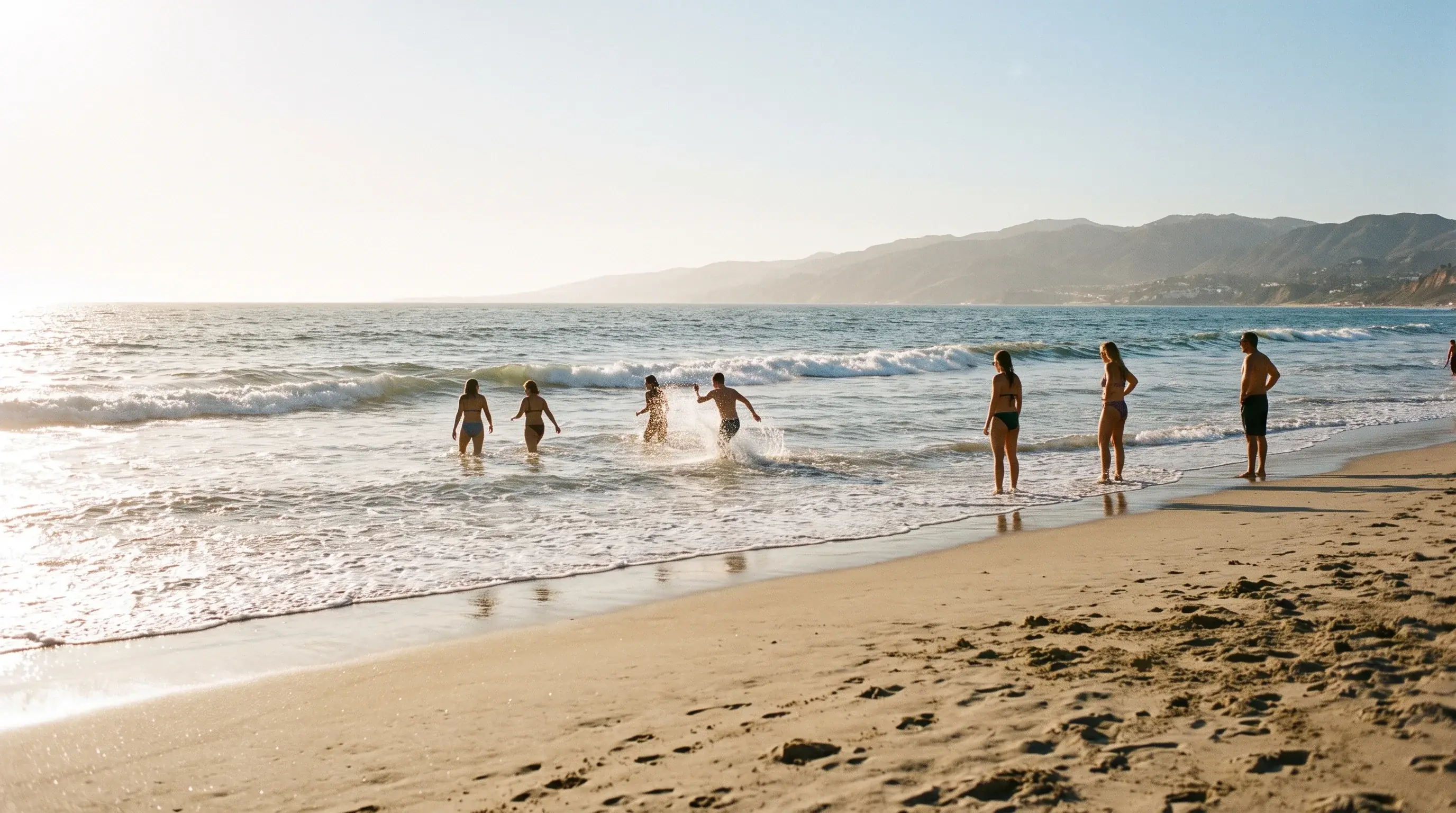
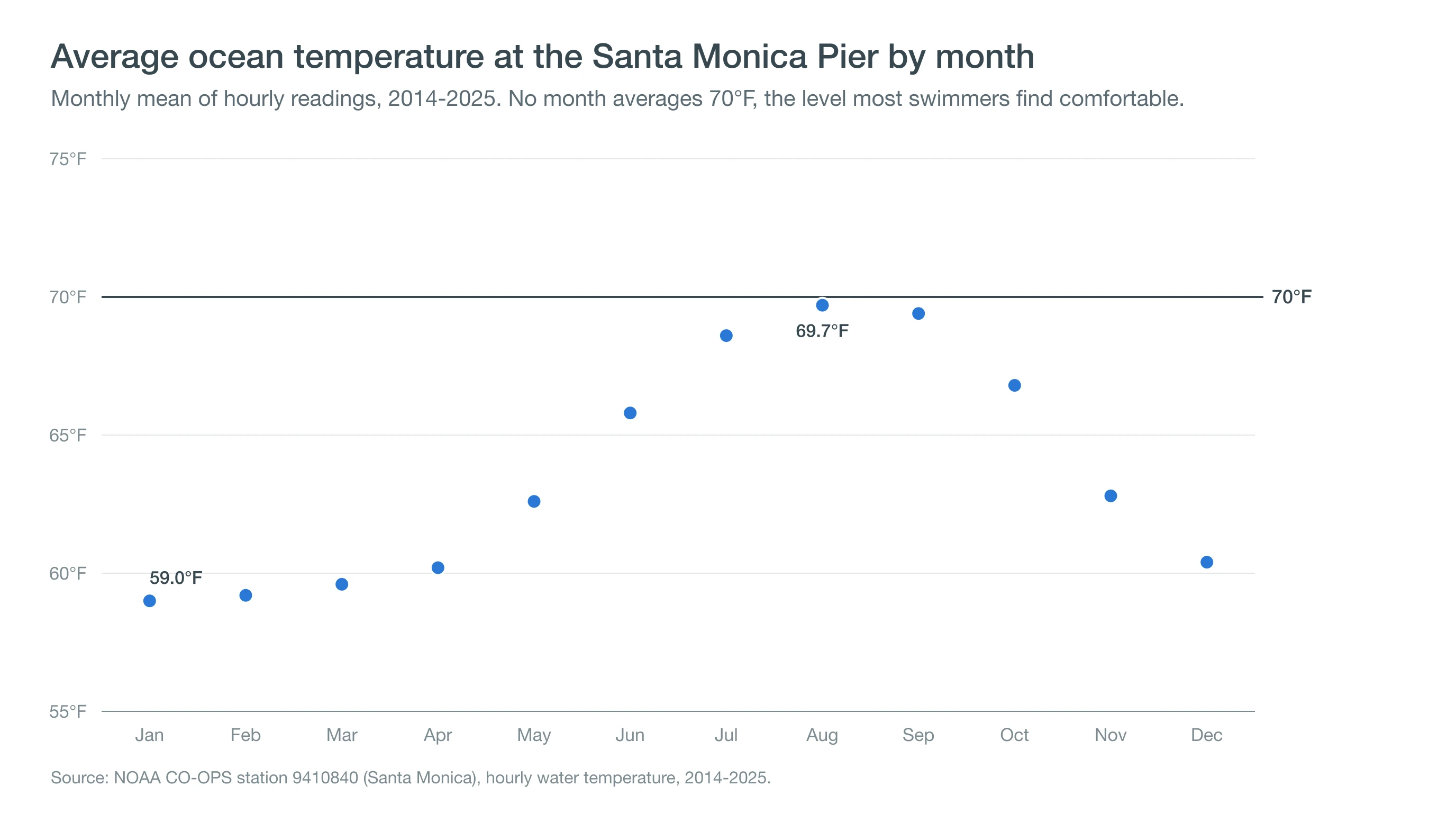
The ocean off Los Angeles is colder than most visitors expect. At the Santa Monica Pier, the water averages about 59°F in January and February, 66°F in June, and peaks near 70°F in August and September. It reaches 70°F on about half of August days and 41% of September days, and never from November through May. Late July to early October is the best stretch for swimming.
A beachgoer can step off a 90-degree sidewalk in early July into 66-degree water. The Pacific here warms slowly, peaks after the air does, and can drop several degrees overnight when the wind shifts. This guide gives the monthly numbers from NOAA's Santa Monica Pier gauge, explains how that water feels, and covers the swimming, wetsuit and safety questions that come with them.
How Warm Is the Ocean in Los Angeles by Month?
The ocean off Los Angeles warms from about 59°F in winter to about 70°F in August. These averages come from hourly readings at NOAA tide station 9410840 at the Santa Monica Pier from 2014 to 2025. The last two columns show how often a day averages at least 70°F, comfortable for most swimmers, and how often it stays below 60°F, cold enough to take your breath away.
| Month | Average | Days at 70°F+ | Days below 60°F |
|---|---|---|---|
| January | 59.0°F | 0% | 80% |
| February | 59.2°F | 0% | 66% |
| March | 59.6°F | 0% | 55% |
| April | 60.2°F | 0% | 42% |
| May | 62.6°F | 0% | 8% |
| June | 65.8°F | 4% | 2% |
| July | 68.6°F | 30% | 0% |
| August | 69.7°F | 50% | 0% |
| September | 69.4°F | 41% | 0% |
| October | 66.8°F | 13% | 1% |
| November | 62.8°F | 0% | 15% |
| December | 60.4°F | 0% | 46% |
Other beaches differ by a few degrees. The Los Angeles outer harbor gauge at San Pedro averages 66°F in August and 61°F in January, a smaller swing than Santa Monica. Readings also vary with depth, swell and wind at each beach, from Malibu to Long Beach, so use these numbers as a seasonal guide, not an exact reading for a particular beach. The monthly pattern holds along the whole LA coast.
When Is the Water Warm Enough to Swim in LA?
The water off Los Angeles is warm enough for most swimmers from late July to early October, and the warmest weeks usually fall between mid-August and mid-September. That is when the Santa Monica Pier averages 69-70°F and reaches 70°F on roughly half of days. Early October is still good; by November the water is back in the low 60s.
At 70°F or warmer, most people can swim comfortably for a while. From 65°F to 69°F, the water is bracing: fine for a swim, cold on the way in. Below 60°F, as it is on most days from January through March, the cold can make swimmers gasp. For kids and casual swimmers, August and September afternoons are the easiest time to enjoy the water.
Why Is the Pacific So Cold Off Los Angeles, Even in Summer?
The Pacific stays cold off Los Angeles for two reasons. The California Current carries cold water south from the North Pacific along the entire West Coast. Spring and summer winds from the northwest also push surface water offshore, drawing colder water up from below in a process called upwelling.
The ocean also stores heat far more slowly than land, so the water peaks about two months after the longest days of the year. That delay is why September water is warmer than July water, and why the coast stays mild into October. Warm, calm water is one of the ingredients behind a red tide.
Why Can the Water Feel 7 Degrees Colder Than Yesterday?
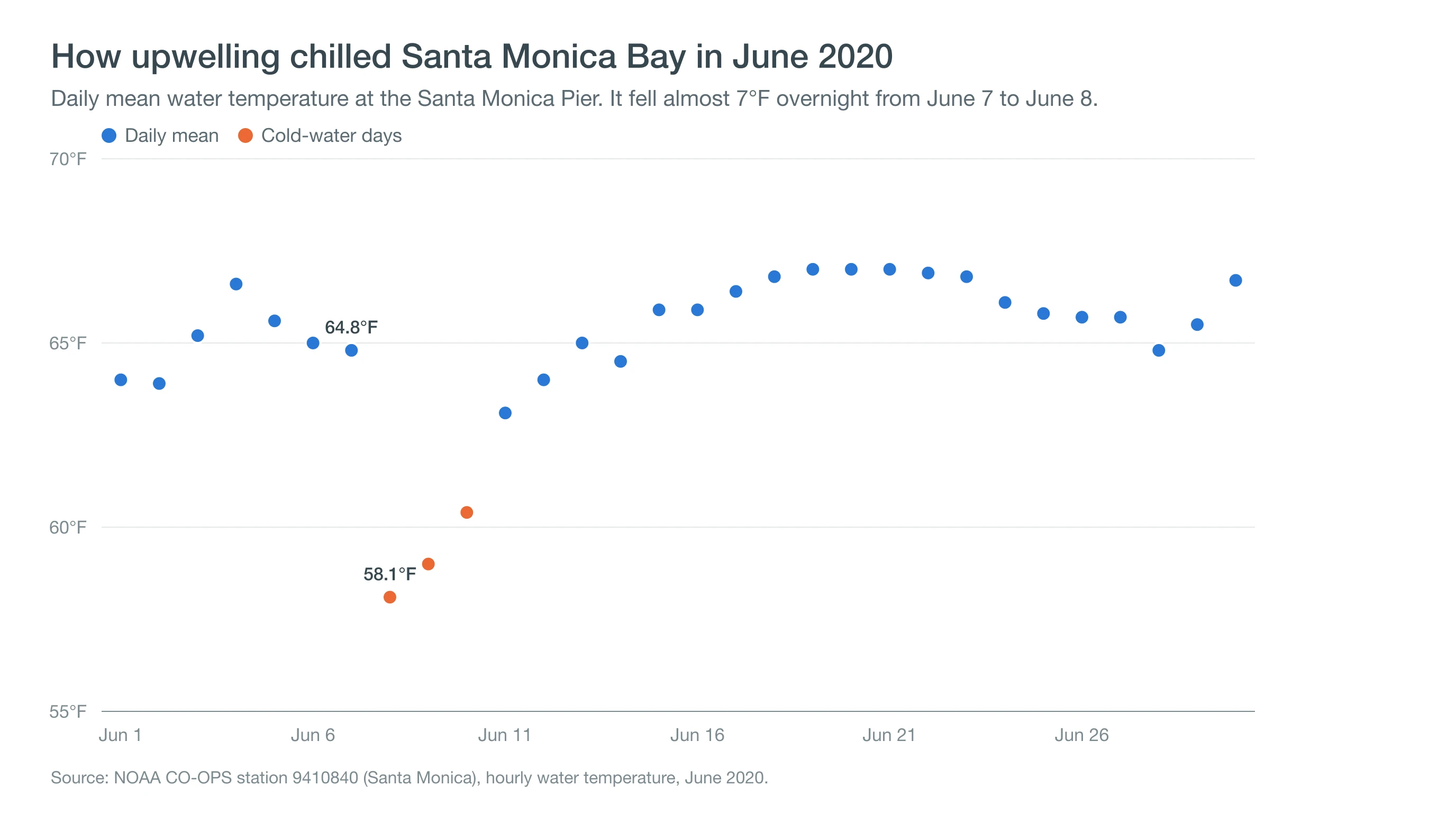
The water off Los Angeles can feel 7 degrees colder than the day before because upwelling can switch on in a day. On June 7, 2020, the Santa Monica Pier gauge averaged 64.8°F.
On June 8 it averaged 58.1°F, a drop of nearly seven degrees, during a burst of strong northwest winds that averaged 14 knots at the offshore buoy with gusts near 25. It took about a week for the water to recover. Because of swings like that, a same-day reading is more useful than any average.
The opposite happens during marine heat waves. In August 2018, the pier gauge peaked at 77.5°F on August 9, and that same day Scripps Pier in La Jolla set its all-time record of 79.5°F. Across 2014-2025, the August average at Santa Monica ranged from 66.8°F in the coolest year to 72.6°F in the warmest, so one summer can feel very different from the next.
Do You Need a Wetsuit to Swim in LA?
Most swimmers need a wetsuit in Los Angeles for most of the year if they plan to stay in longer than a quick dip. Surfers wear full wetsuits through winter and spring, and many keep them on into early summer. In August and September, plenty of swimmers go without for short sessions.
Cold water is a safety issue, not just a comfort one. The National Center for Cold Water Safety treats any water below 70°F with caution and says the involuntary gasp of cold shock is strongest between about 50°F and 60°F, the range LA water sits in for much of winter. Enter gradually, keep your head above water until your breathing settles, and never swim alone in cold water.
What Else Should You Check Before Getting in the Water?
Water temperature is only one part of a safe swim in Los Angeles. Check the lifeguard tower flags and learn to spot rip currents, and stay out during high surf. Water quality matters too: LA County Public Health advises staying out of the ocean for at least 72 hours after rain, when runoff from storm drains, creeks and rivers carries bacteria to the beaches. Heal the Bay's 2025-26 report card also ranked the water directly under the Santa Monica Pier among the most polluted in California, so swim well away from the pier.
Timing matters most for swimming in the Pacific off Los Angeles. Aim for an afternoon between late July and early October, pick a lifeguarded beach away from piers and storm drains, and check the day's conditions before you go. Our Santa Monica and Long Beach pages show the beach forecast, and NOAA's Santa Monica station posts the latest water reading. Santa Monica weather by month pairs water temperature with air temperature and gray-morning odds.
Snorkeling at Catalina follows the same calendar, as Catalina Island weather by month shows. On a boat, the same cold water chills the air on deck, as the whale-watching weather guide explains.