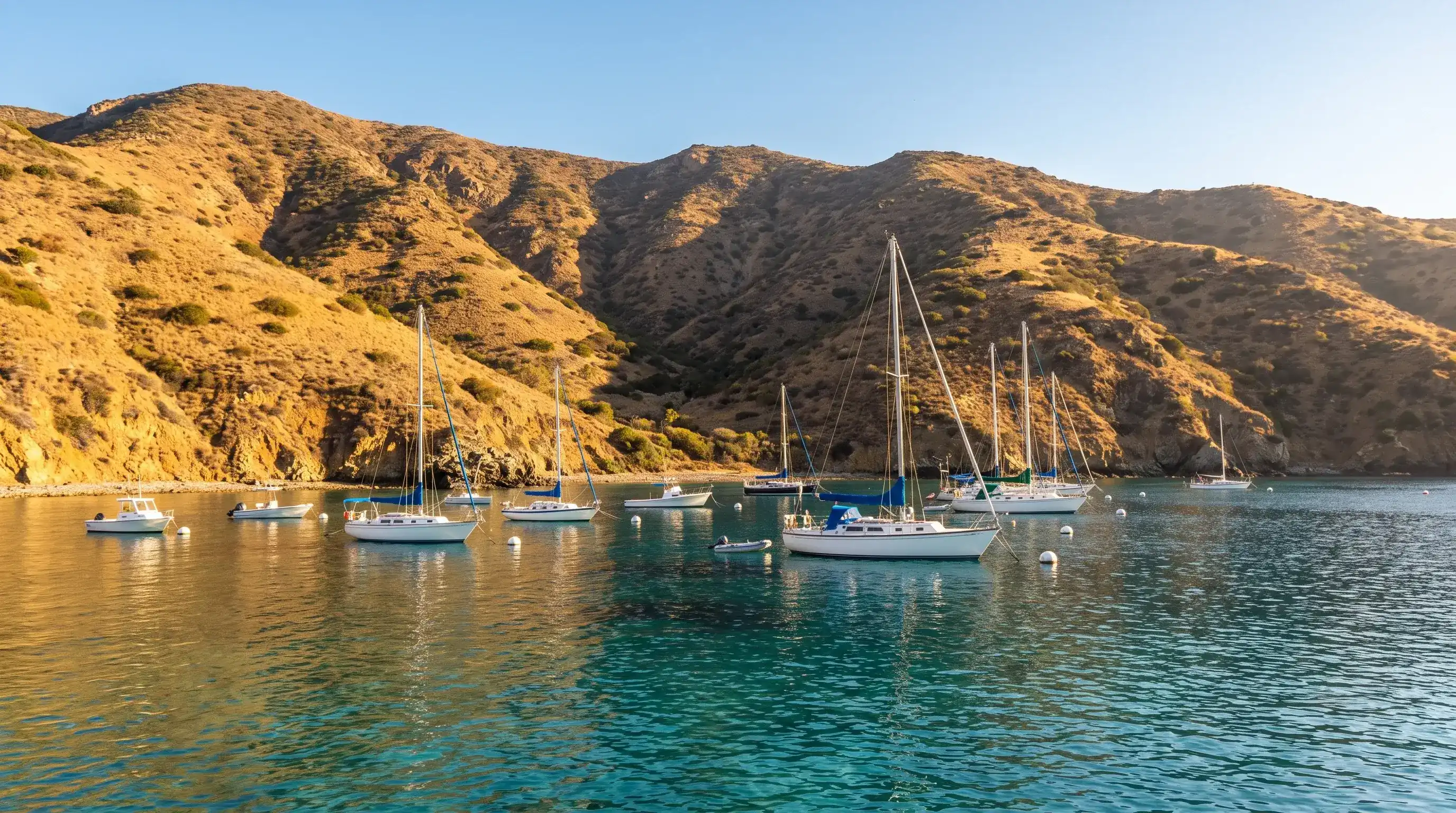
Catalina Island is mild all year. In Avalon, highs run from about 63°F in winter to about 75°F in August, and nights rarely drop below the upper 40s. At the island's airport, 1,602 feet above the sea, summer afternoons reach about 79°F. Rain falls mostly from November to March, the water peaks near 70°F in August and September, and the ferry crossing is roughest from December through March.
Catalina has two climates, one at sea level and one on the ridges, and reaching it takes an hour on open ocean. The "Airport in the Sky" sits on a ridge right at the height of the marine layer. The airport logs measurable drizzle or rain on about five days each in May and June, when Avalon below is often sunny. On Catalina, the weather depends on where you are on the island.
What Is Catalina Island's Weather Like Each Month?
Catalina Island's weather is cool, steady and dry for most of the year, with a short winter rainy season. Avalon has no current official station, so the sea-level numbers below are averages from the Avalon Pleasure Pier weather station, which ran from 1959 to 1988. The airport columns are NOAA's current 1991-2020 normals, and the water temperatures come from the Santa Monica Basin buoy, the closest long record to the channel.
| Month | Avalon high / low | Airport high / low | Rain (airport) | Water |
|---|---|---|---|---|
| January | 63 / 48 | 62 / 50 | 3.04 | 59 |
| February | 64 / 48 | 60 / 49 | 2.83 | 59 |
| March | 64 / 49 | 61 / 49 | 1.67 | 58 |
| April | 66 / 52 | 64 / 50 | 0.78 | 60 |
| May | 68 / 54 | 67 / 52 | 0.36 | 62 |
| June | 70 / 57 | 70 / 55 | 0.21 | 65 |
| July | 73 / 61 | 77 / 59 | 0.08 | 68 |
| August | 75 / 62 | 79 / 62 | 0.01 | 70 |
| September | 74 / 61 | 78 / 63 | 0.12 | 69 |
| October | 71 / 57 | 73 / 58 | 0.48 | 67 |
| November | 67 / 52 | 67 / 54 | 0.97 | 62 |
| December | 63 / 48 | 60 / 49 | 2.22 | 60 |
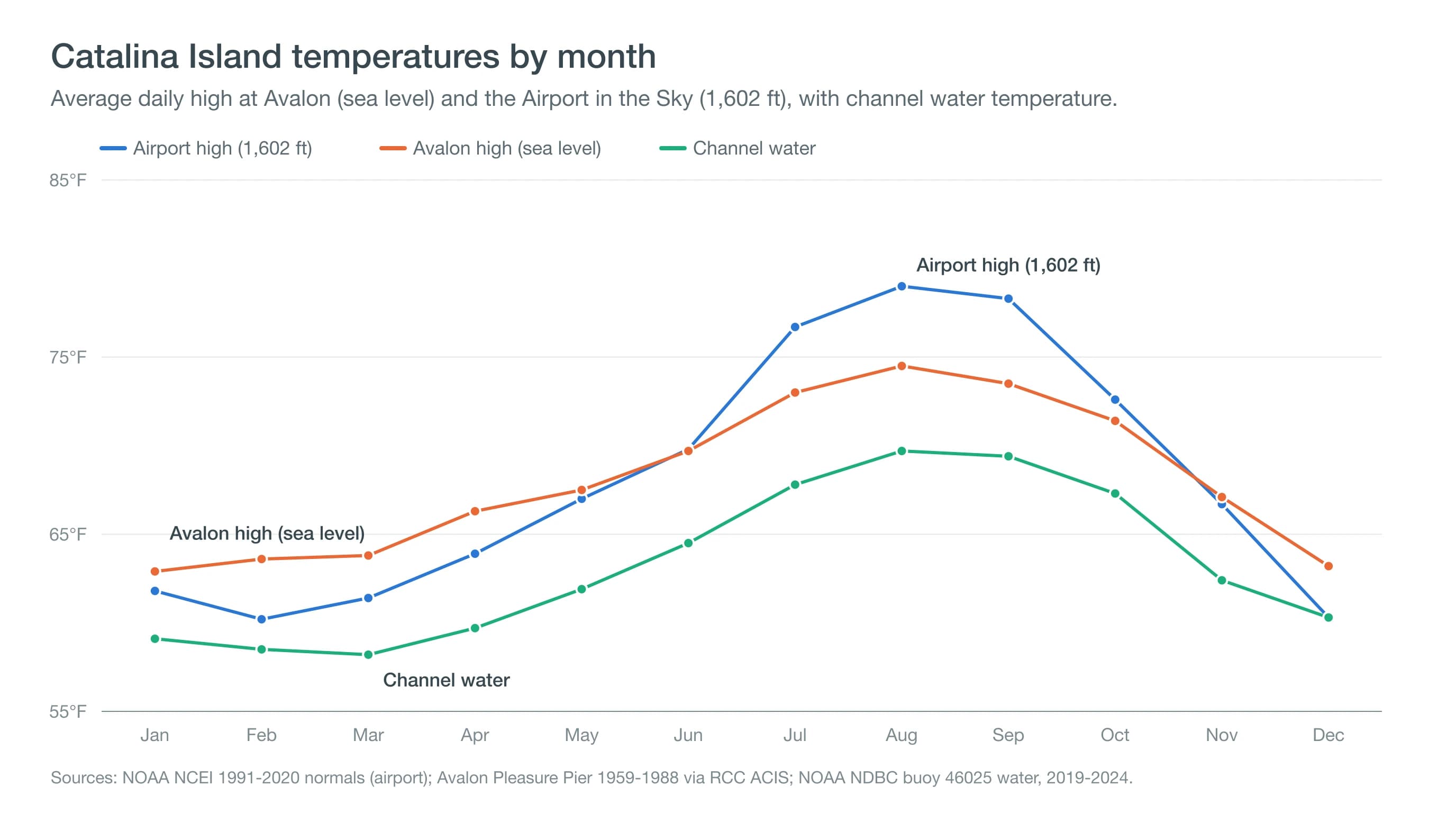
The two stations switch places through the year. In winter the airport is a degree or three cooler by day than Avalon but milder at night, because cold air drains off the hills and pools at sea level. From July to September the airport often sits above the marine layer in the afternoon and runs about 4 degrees warmer. It averages about 14 days a year at 90°F or hotter; Avalon averaged about one.
Is Catalina Warmer or Cooler Than Los Angeles?
Catalina is cooler than Los Angeles in summer and about the same in winter. Avalon's August average of about 75°F compares with 84°F in Downtown Los Angeles and well over 90°F in the San Fernando Valley, because the island is surrounded by the same cold California Current that keeps the mainland beaches cool. Winter highs of 63°F to 64°F are close to the coast's, and frost is almost unknown in town: the Avalon pier dropped to freezing on only eight days in 30 years. For a mainland comparison, see Los Angeles weather by month.
When Is the Ferry to Catalina Roughest?
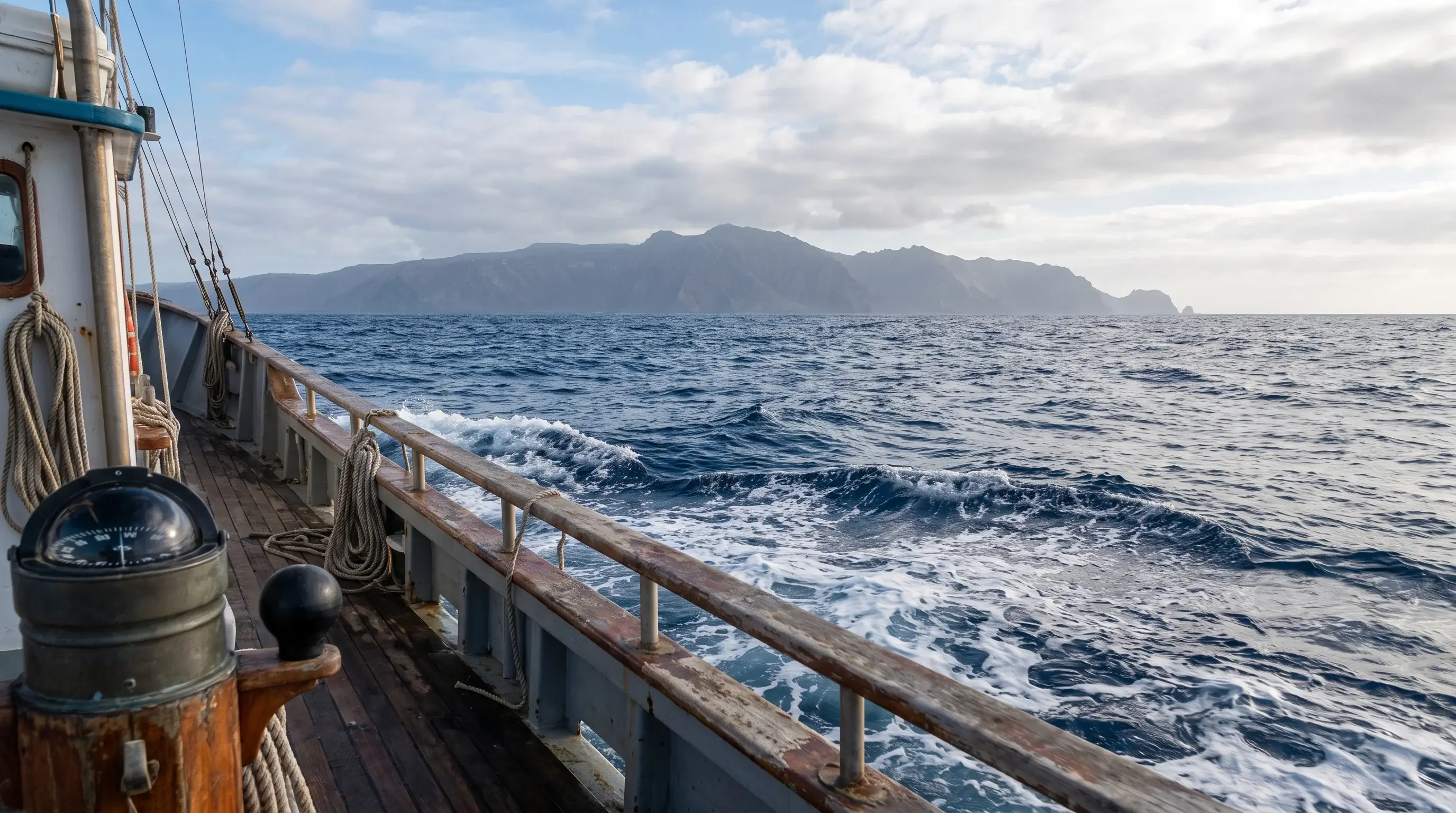
The ferry to Catalina is roughest from December through March. At the Santa Monica Basin buoy, waves average about 4 to 5 feet from January to March and about 3 feet from June to October. Strong afternoon winds of 15 knots or more show up on roughly one February or March afternoon in seven. The crossing from Long Beach, San Pedro or Dana Point takes about an hour, and in winter the boat often rolls steadily in Pacific swell. Spring adds breezy afternoons, as the sea breeze and northwest winds pick up.
For an easier ride, book a morning boat, sit low and near the middle of the vessel, and keep your eyes on the horizon. Catalina Express cancels sailings when storms or big surf make the crossing unsafe, and its travel policies say it accepts no responsibility for cancellations due to adverse weather. Check its alerts and the National Weather Service coastal waters forecast before you go, especially in winter. The high surf guide and wind hazards guide explain the warnings that matter.
How Does Fog Affect a Catalina Trip?
Fog affects a Catalina trip mostly by closing the airport and hiding the interior. The marine layer reaches a height of about 1,000 to 2,000 feet on many late-spring and early-summer mornings, which puts the Airport in the Sky right in the cloud. That is why the airport averages about five days of measurable precipitation in both May and June, much of it drizzle, and why it often closes to planes in fog. Avalon, below the clouds, often stays dry and sometimes turns sunny while the ridge stays in fog.
On some mornings a Catalina eddy, a counterclockwise spin in the winds that takes its name from the island, thickens the clouds over the channel and the mainland coast. If you plan to hike to the interior or take a jeep tour for views, afternoons from late July through October give the best odds of clear skies. A clear evening with a clean ocean horizon is the setup for the green flash at sunset.
When Is the Water Warm Enough to Swim or Snorkel at Catalina?
The water at Catalina is warm enough to swim or snorkel in August and September, when the channel averages about 70°F. The water climbs from about 58°F in March to 65°F in June and 68°F in July, then cools to about 62°F by November. Many snorkelers at Avalon's Descanso Beach and Lover's Cove are comfortable in a 3-millimeter wetsuit in late summer and want something thicker the rest of the year. The water here is cold for the same reason the mainland's is, explained in why the Pacific is so cold, and the LA ocean temperature guide has the mainland numbers.
What Is the Best Month to Visit Catalina Island?
The best months to visit Catalina Island are September and October. Avalon still averages 71°F to 74°F, the water is near its warmest, the crossings are usually calm, and the summer crowds have thinned. July and August bring the warmest water and the busiest weekends.
Spring is good for hiking, with green hills and mild days, but expect breezy crossings and gray mornings in May and June. Winter is the quietest season, but it brings rain, rougher water and occasional canceled boats.
Choose your month based on the water temperature you want, book a morning crossing when you can, and check the forecast for the island's far end on our Catalina Two Harbors page, along with the mainland ports of Long Beach and San Pedro.