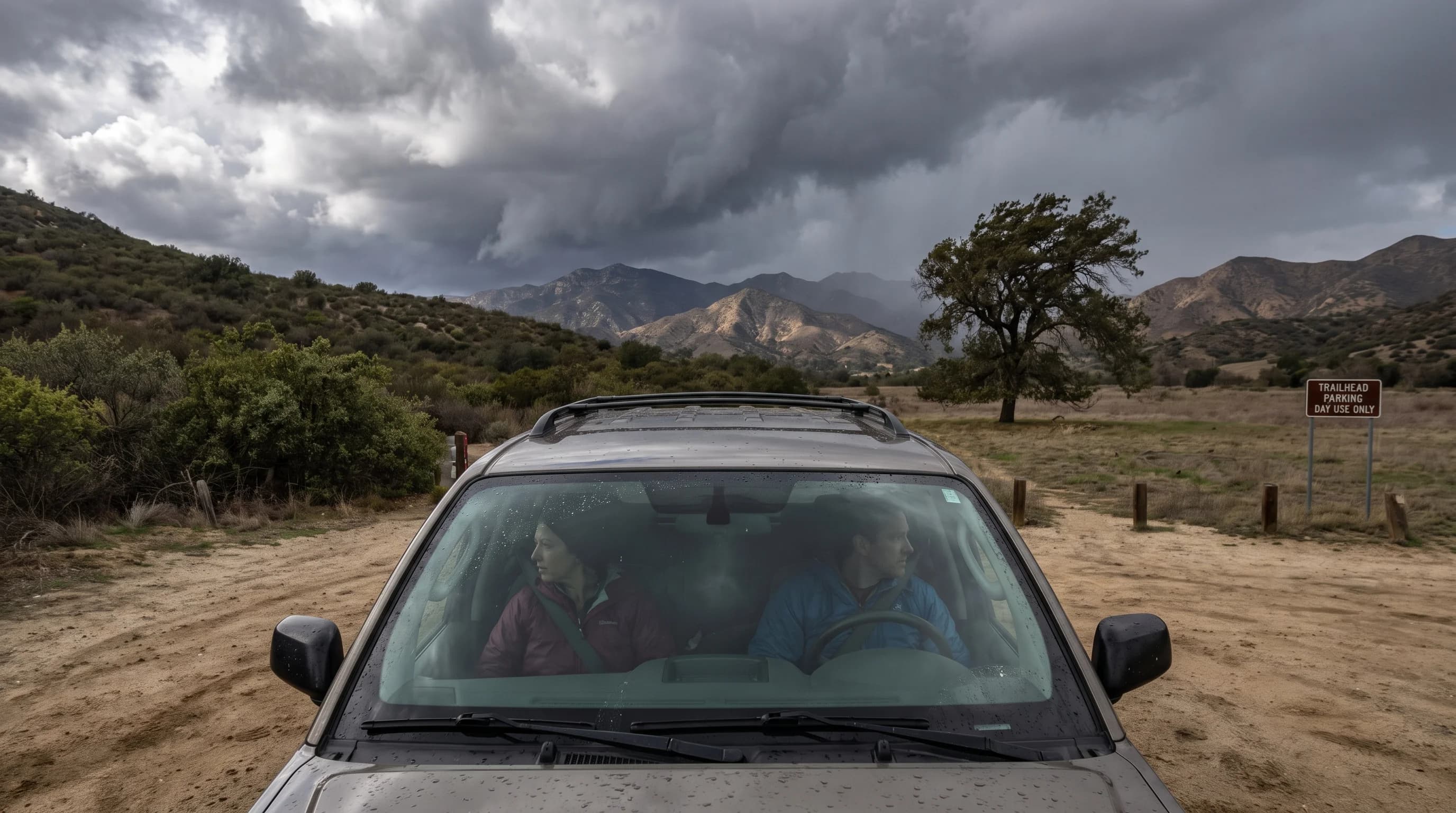
When you hear thunder, move immediately into a substantial enclosed building or a hard-topped vehicle with the windows up, because lightning strikes well away from the heaviest rain. Southern California gets fewer thunderstorms than much of the country. Thunderstorms still build reliably over the mountains and deserts during summer monsoon season, and occasionally during winter storms, and each carries the same lightning risk as a storm anywhere else. Waiting for rain to reach you before taking shelter is a common and dangerous mistake.
When Is Lightning a Threat in Southern California?
Lightning threatens Southern California most often during summer monsoon season, when moisture from Mexico destabilizes the air over the mountains and deserts. Thunderstorms build over high terrain and can drift toward populated areas in the afternoon and evening. Winter storms occasionally bring lightning too, especially when cold, unstable air follows a Pacific front.
Thunder is the signal to act in any season. If you can hear thunder, you are within striking distance of the storm's lightning, even under clear sky with the rain miles away.
Where Is a Safe Place During a Storm?
A safe place during a lightning storm is a substantial, fully enclosed building with wiring and plumbing, or a hard-topped metal vehicle with the windows closed, according to NWS lightning safety guidance. Both carry a strike around the people inside and into the ground: a car through its metal frame and a building through its wiring and plumbing.
| Location | Protection level | Why |
|---|---|---|
| Substantial building | Safe | Wiring and plumbing conduct a strike safely into the ground |
| Hard-topped vehicle, windows up | Safe | Metal frame conducts a strike around the occupants |
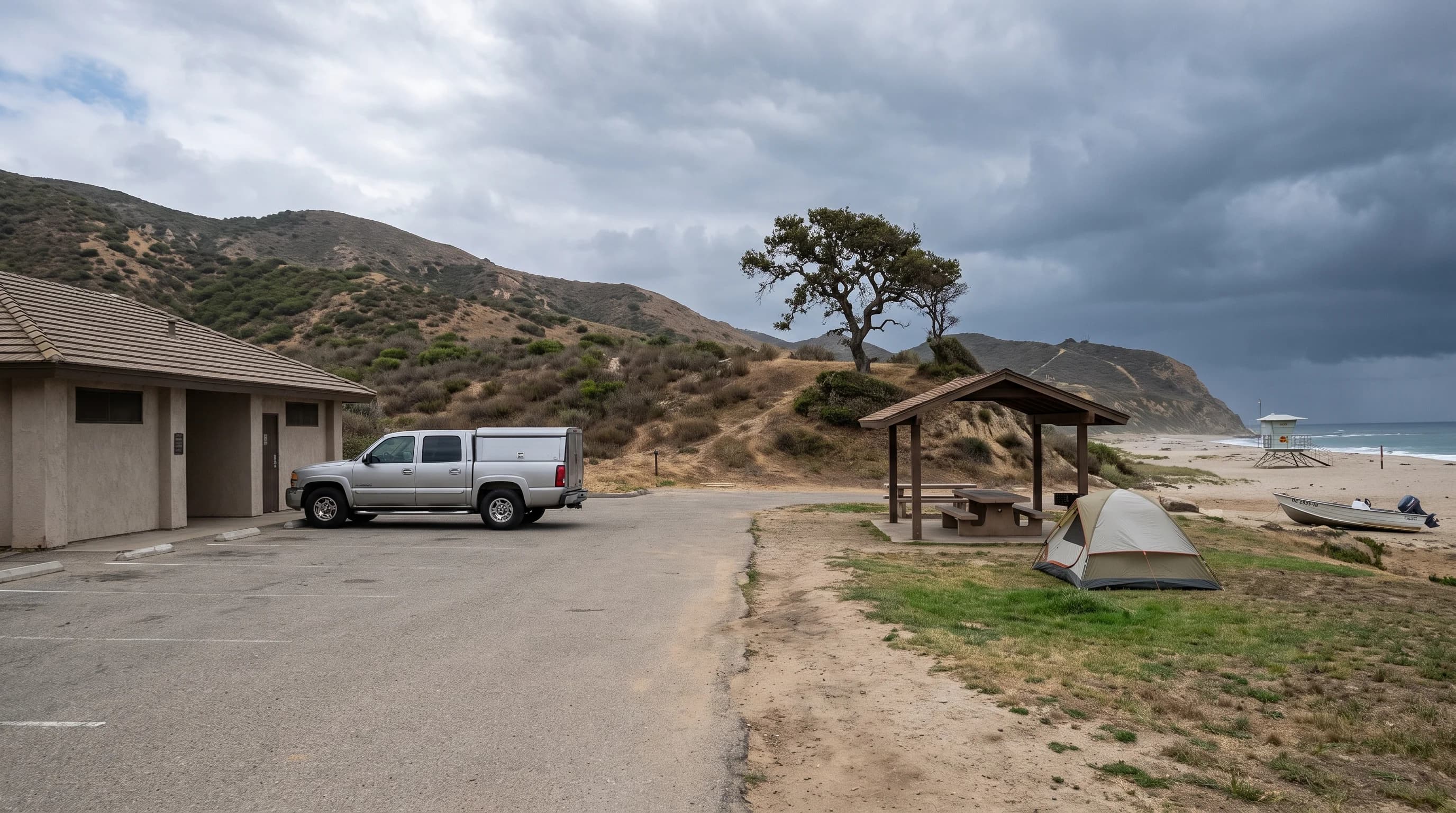
| Picnic shelter or pavilion | Not safe | Open sides provide no protective conductive path |
| Tent or camping shelter | Not safe | Fabric offers no conductive protection at all |
| Isolated tree or ridge | Not safe | Tall, isolated objects are preferential lightning targets |
What Should Hikers, Beachgoers, and Boaters Do?
Hikers on exposed ridges and summits in the San Gabriel and San Bernardino Mountains face extra risk, because they are often the tallest object around during a summer thunderstorm. Check the forecast before starting, and turn around early if storms are building over the peaks, before thunder is audible. No crouching position or lightning stance makes you safe without shelter. Head down toward a vehicle or building at the first sign of building storm clouds.
Beachgoers have no shelter on open sand, and a thunderstorm over the coastal mountains can send lightning to the beach well before any rain arrives. Boaters on open water are especially exposed, because a boat is often the tallest object on the water and lightning can strike the water and spread through it. Head for a hard-topped marina building or the nearest safe harbor as soon as you hear thunder.
Can Lightning Strike a Car, House, or Person Indoors?
Lightning can strike a car or a house, and their construction protects the people inside. A hard-topped vehicle protects its occupants because its metal frame carries the strike around the cabin into the ground. Rubber tires do not provide the protection; that is a myth. A convertible or a car with a fiberglass or soft top has no continuous metal shell and offers much less protection.
Indoors, lightning can still reach people through wiring, plumbing and corded electronics. NWS guidance says to avoid corded phones, plugged-in electronics and plumbing fixtures such as sinks and showers during a thunderstorm, because water and metal pipes can carry a strike from outside. Stay away from windows and exterior doors during an active storm.
When Is It Safe to Go Back Outside?
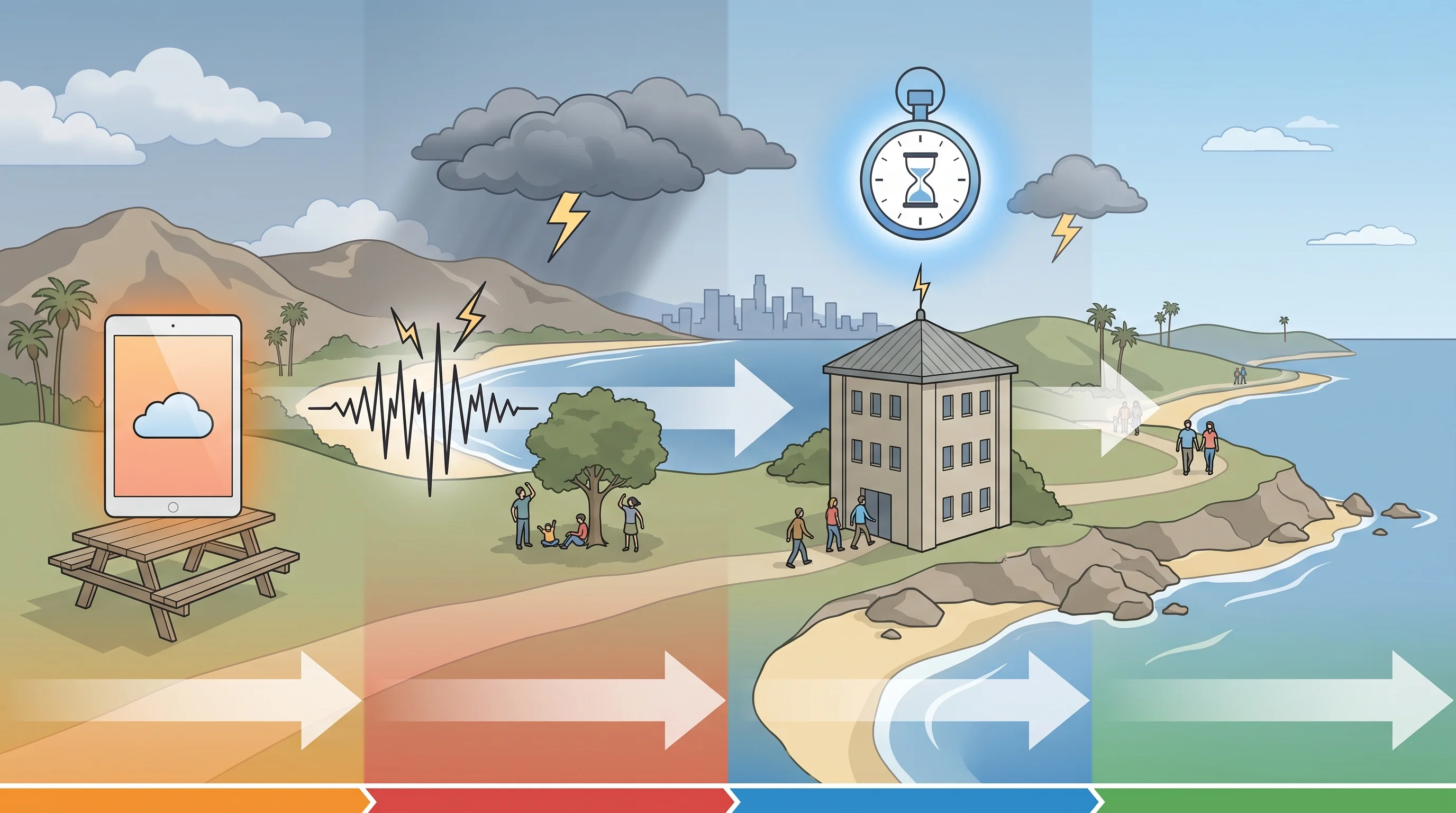
Wait at least 30 minutes after the last thunder before going back outside, as the NWS recommends. The 30-30 rule summarizes this: take shelter if thunder follows lightning within 30 seconds, and wait 30 minutes after the last thunder before resuming outdoor activity. A departing storm can still strike behind its visible rain, so the wait matters even when the sky starts to clear.
The 30-minute wait applies at the beach, on a mountain trail or in a backyard. Southern California's sunny climate is no exception, because a departing storm's lightning risk does not depend on how rare storms are locally.
Which Alerts Should You Monitor?
Monitor live radar and lightning data along with official products from NWS Los Angeles/Oxnard or NWS San Diego, including Severe Thunderstorm Warnings and special weather statements about developing storms. Heavy rain from the same storms can cause flash flooding, especially near recent burn scars in the mountains and foothills; see how atmospheric rivers drench Southern California. The strongest storms can also bring large hail, covered in how hail forms and when LA sees it.
No warning does not mean no danger. Warnings are issued when a storm reaches a set threshold, and lightning strikes from developing storms before any warning is posted. Thunder, not an alert, is the signal to take shelter.
Lightning safety in Southern California follows one rule in every season and at every elevation: when you hear thunder, get inside a substantial building or hard-topped vehicle, and wait 30 minutes after the last thunder before going back out. Before hiking, visiting the beach or boating in storm season, check radar, lightning activity and NWS warnings for your destination on WeatherLA.