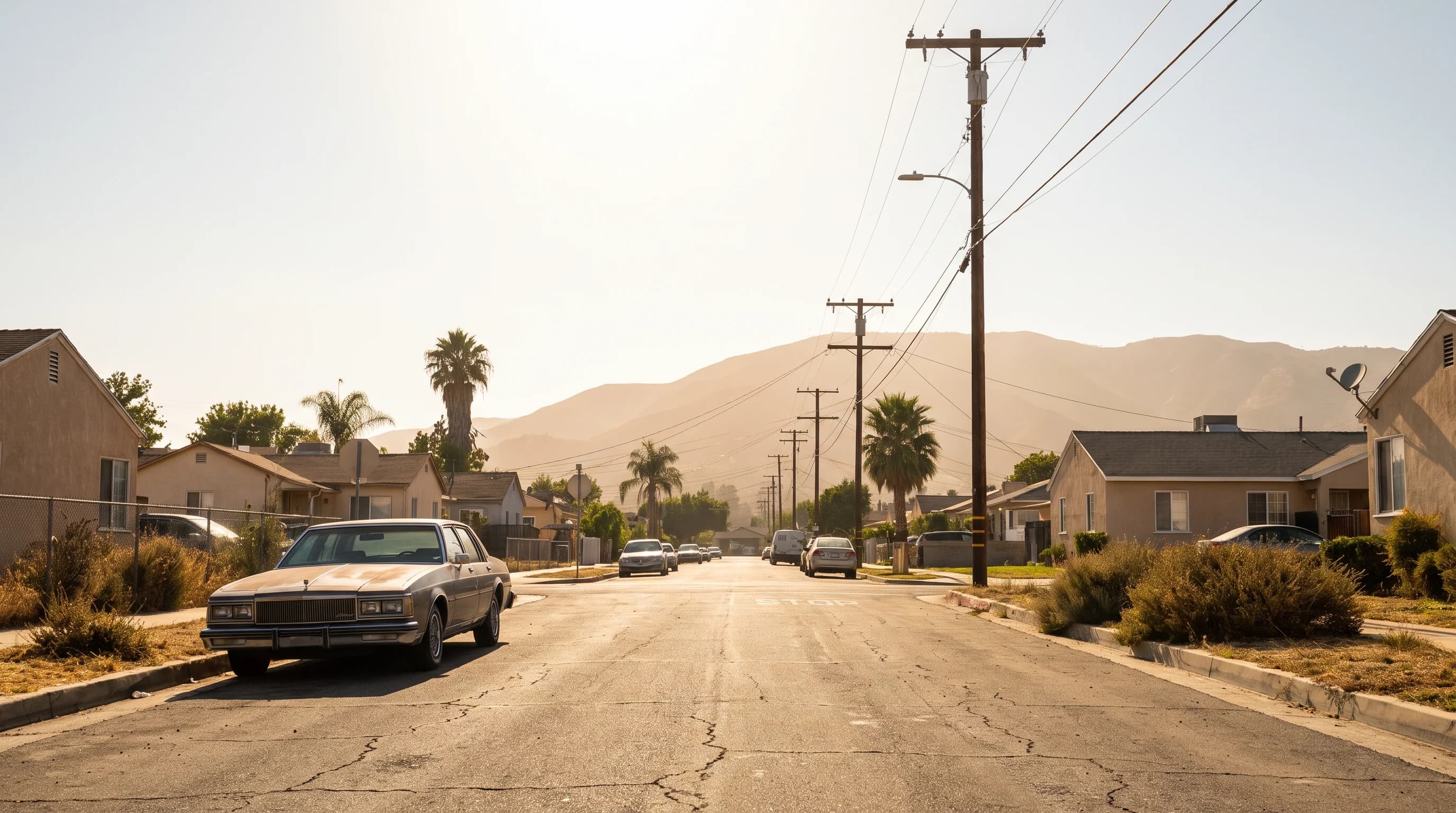
Los Angeles smog is photochemical smog, a mix of ground-level ozone and other pollutants created when nitrogen oxides (NOx) and volatile organic compounds (VOCs) react in strong sunlight. Those ingredients come mostly from vehicle exhaust, fuels and industry.
No one emits smog directly. Cars and equipment release the ingredients, and sunlight turns them into ozone over the day. Smog therefore builds through the morning and peaks in the afternoon, after the traffic that caused it has thinned.
What Is Smog?
Smog is a general term for visibly polluted air, but it means something specific in Los Angeles. The word first described smoke mixed with fog in industrial cities like London, where coal soot and natural fog formed a thick, choking haze.
Los Angeles smog is photochemical smog, first noticed in the 1940s and explained in the early 1950s by Caltech biochemist Arie Haagen-Smit. Haagen-Smit showed that LA's haze and crop damage came from vehicle and industrial emissions reacting in sunlight, not industrial smoke alone. His discovery changed how cities regulate air pollution.
Ozone can be high when the sky does not look brown. Ground-level ozone is a colorless gas. The haze people associate with smog usually comes from fine particles that form alongside the ozone. A clear-looking sky over Downtown Los Angeles can still carry high ozone, so air quality must be measured, not judged by eye.
How Does Photochemical Smog Form?
Photochemical smog forms when nitrogen oxides and volatile organic compounds react in sunlight and produce ground-level ozone and other oxidants. Nitrogen oxides come mainly from burning fuel in tailpipes, diesel engines, power equipment and industrial burners.
VOCs come from gasoline vapor, solvents, paints and other fuel and chemical products. Neither is smog on its own. Sunlight-driven chemistry in the air over the city turns them into ozone over a few hours.
Smog is a secondary pollutant: it is not measured at the tailpipe but forms downwind and later in the day. Smog usually peaks in the afternoon after the morning's emissions have had several hours of sunlight. The table below lists the main ingredients.
| Ingredient or condition | Role in the process | LA example |
|---|---|---|
| Nitrogen oxides (NOx) | Precursor gases released mainly by combustion | Cars, trucks, equipment, industry |
| Volatile organic compounds (VOCs) | React with NOx in the atmosphere | Fuels, solvents, consumer and industrial sources |
| Strong sunlight and heat | Speed the photochemical reactions | Sunny warm-season afternoons |
| Light wind or an inversion | Limits vertical or horizontal dispersion | Stagnant basin conditions |
| Sea-breeze transport and terrain | Moves and pools pollution inland | San Gabriel Valley and inland basin |
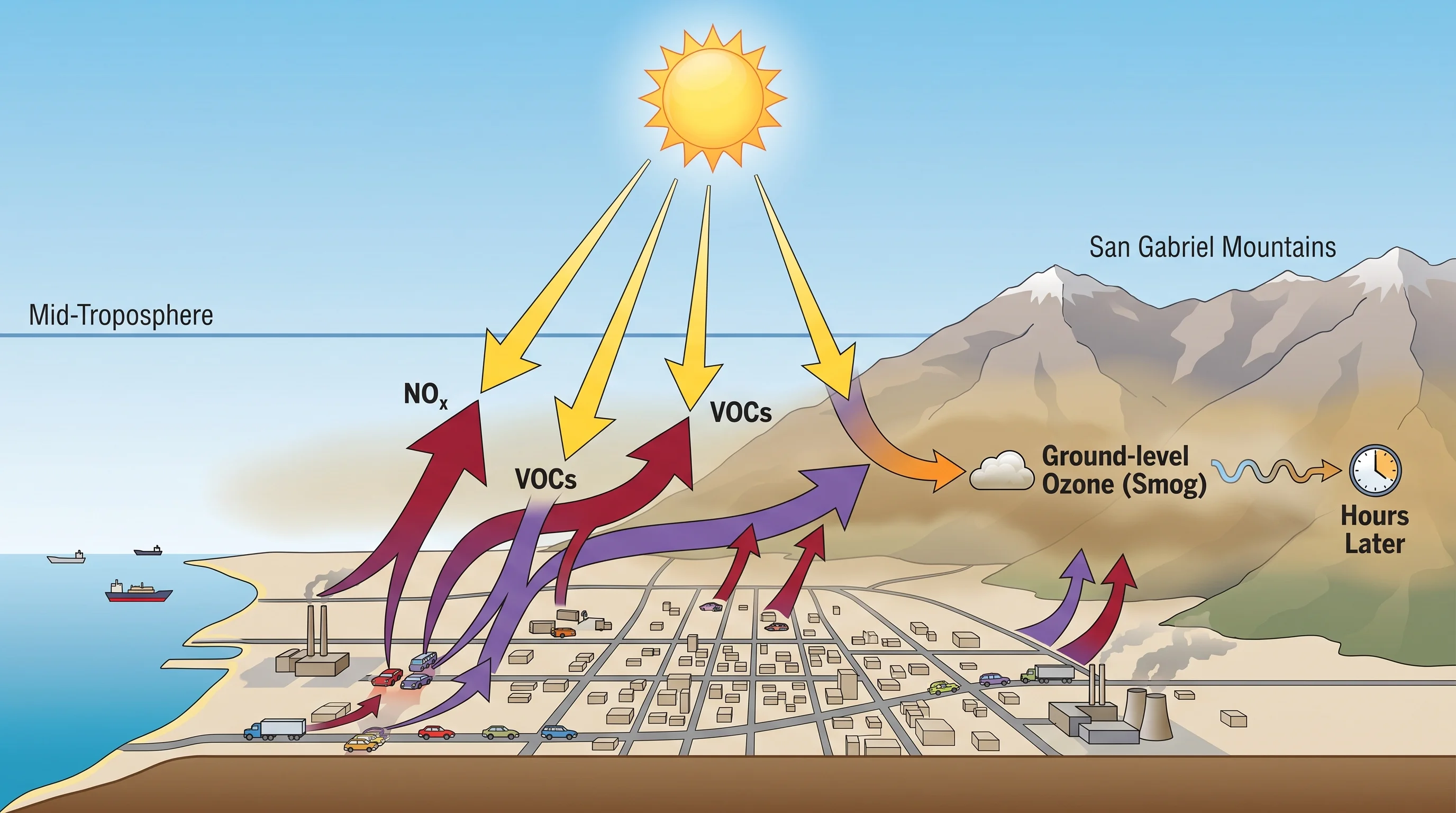
Ground-level ozone is not the ozone layer. Stratospheric ozone sits many miles up and shields Earth from ultraviolet radiation, which is beneficial. Ground-level ozone forms in the air people breathe and is regulated because it is harmful. The molecule is the same; its role depends on where it sits in the atmosphere.
Why Is Los Angeles So Prone to Smog?
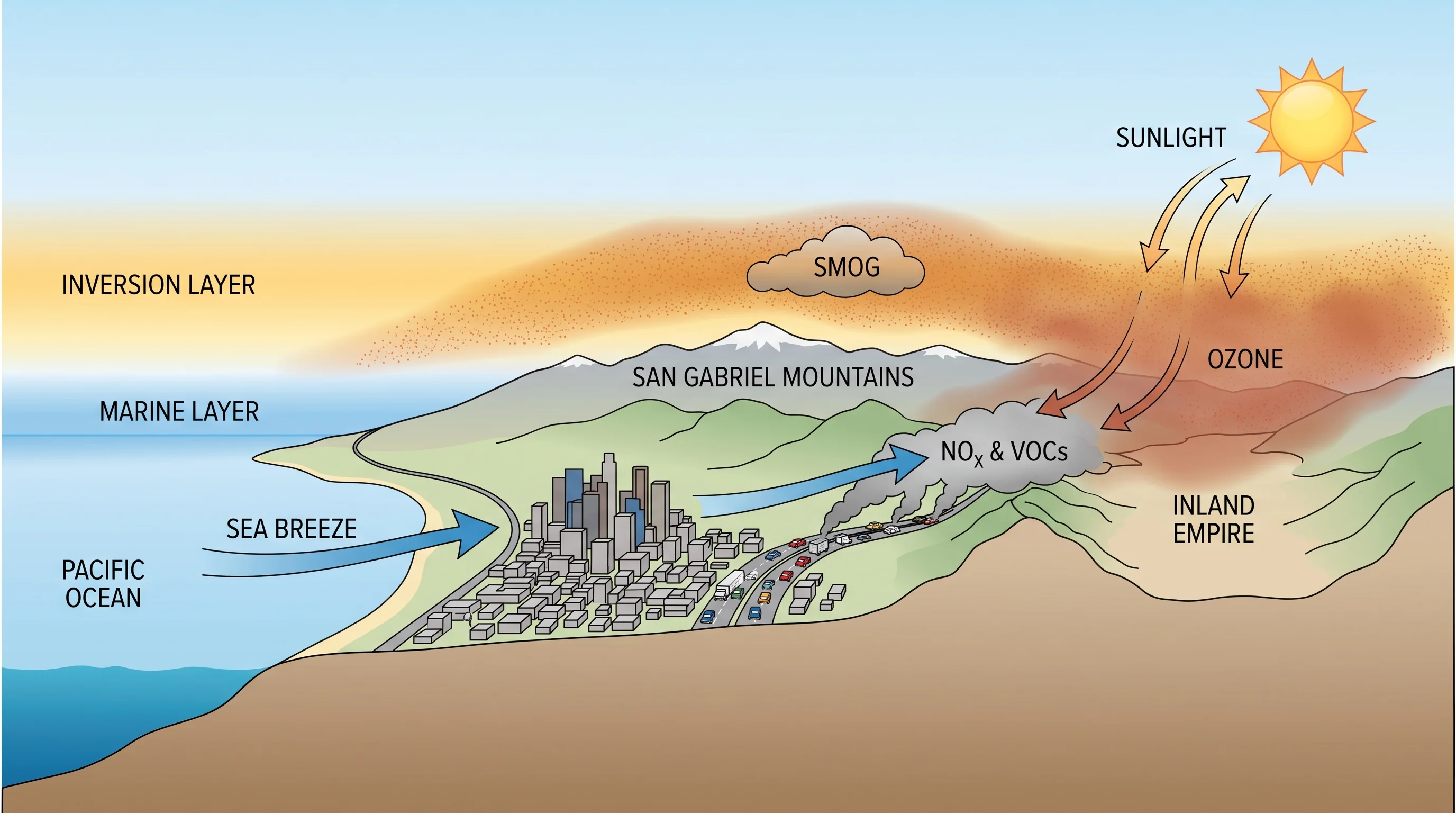
Los Angeles is prone to smog because it combines abundant sunshine and heavy vehicle and industrial emissions with a basin and weather that trap or move pollution instead of clearing it. The South Coast Air Basin sits in a bowl with the Pacific Ocean on one side and the San Gabriel, San Bernardino and Santa Ana Mountains on the others. The mountains keep pollution from blowing out of the region as it would over flatter land.
Sinking air from the eastern Pacific high-pressure system caps the basin with a temperature inversion for much of the warm season: warm air aloft over cooler air near the ground. The inversion acts like a lid, limiting how high pollution can mix and keeping emissions and ozone near the ground. The inversion also shapes humidity and fog, as humidity and dew point in Los Angeles explains.
Daytime sea breezes complicate the pattern. Onshore wind cleans the coast, but it carries smog ingredients and ozone inland toward the San Gabriel Valley and beyond through the afternoon. That is one reason inland communities often have worse ozone than the beaches where much of the traffic started.
City heat also affects how the basin holds and moves air; see the urban heat island effect in Los Angeles. For how geography, car dependence and inversions combine, see why Los Angeles is so smoggy.
When and Where Is LA Smog Usually Worst?
LA smog is usually worst on sunny, hot, stagnant afternoons in inland and downwind parts of the South Coast Air Basin, from late spring through early fall, when sunlight is strongest and the inversion most persistent. The coast usually has the lowest ozone because onshore wind clears it first, according to South Coast AQMD and CARB monitoring. Inland valleys usually record the highest, because the pollution there has had more time to react and less wind to spread it.
A coastal air quality reading therefore cannot stand in for Pasadena or Woodland Hills. Ozone forms and builds downwind, so the San Gabriel and San Fernando valleys can have much worse air on the same afternoon that Long Beach enjoys a clean sea breeze. The pattern shifts from year to year with weather and emissions, so check a current monitoring period before ranking any community as worst.
Is Smog Dangerous?
Smog is dangerous because ground-level ozone irritates and damages the respiratory system. The EPA ozone health summary names children, older adults, people with asthma or other lung disease and people active outdoors as the most at-risk groups. Short-term exposure can make breathing harder and worsen existing conditions, and repeated exposure is linked to broader lung harm. The AirNow Air Quality Index turns ozone and particle levels into categories from Good to Hazardous, with recommended actions developed by the EPA with state and local agencies including South Coast AQMD.
Ozone is invisible, so you cannot judge risk by how hazy the sky looks. A clear afternoon can carry a Moderate or Unhealthy for Sensitive Groups ozone reading, especially inland, while a hazy coastal morning may be fog. During warm, sunny, stagnant weather, check the current AQI and its dominant pollutant before strenuous outdoor activity.
Is the Haze Smog, Wildfire Smoke, or Marine Fog?
Smog, wildfire smoke and marine fog cannot be reliably told apart by color, because ozone is invisible and haze can come from particles, smoke or water droplets. Photochemical smog is usually ozone plus particles built up over a sunny day. Wildfire smoke is mostly fine particles (PM2.5) from a fire, and it can spike air quality readings quickly at any time of day.
Marine fog is neither: it is water droplets condensed from cool, moist ocean air near the coast, as Los Angeles marine layer and gray mornings explains. Fog is water, not an AQI pollutant, though it can mix with polluted air. To tell the three apart, see WeatherLA's smog vs. smoke vs. fog guide.
How Do You Track Smog and Ozone in LA?
To track smog in Los Angeles, check the AQI's dominant pollutant, the nearest monitoring station, the reading's timestamp and, when available, the day's ozone forecast. South Coast AQMD runs the monitors across the South Coast Air Basin and issues forecasts and advisories. The California Air Resources Board ozone fact sheet explains the chemistry. AirNow collects official monitor data nationally and converts it into the EPA's AQI categories.
Which pollutant drives the AQI matters. An ozone-driven reading rises through hot, sunny, stagnant afternoons and falls in the evening as sunlight fades. A PM2.5-driven reading, typical of wildfire smoke or winter stagnation, can stay high around the clock. The dominant pollutant tells you whether you face summer smog or something else.
Los Angeles smog is a chemistry problem shaped by the basin's weather. Before an afternoon hike, outdoor event or long time outside anywhere from the coast to the inland valleys, check the current AQI and its dominant pollutant for your destination instead of judging by the sky.