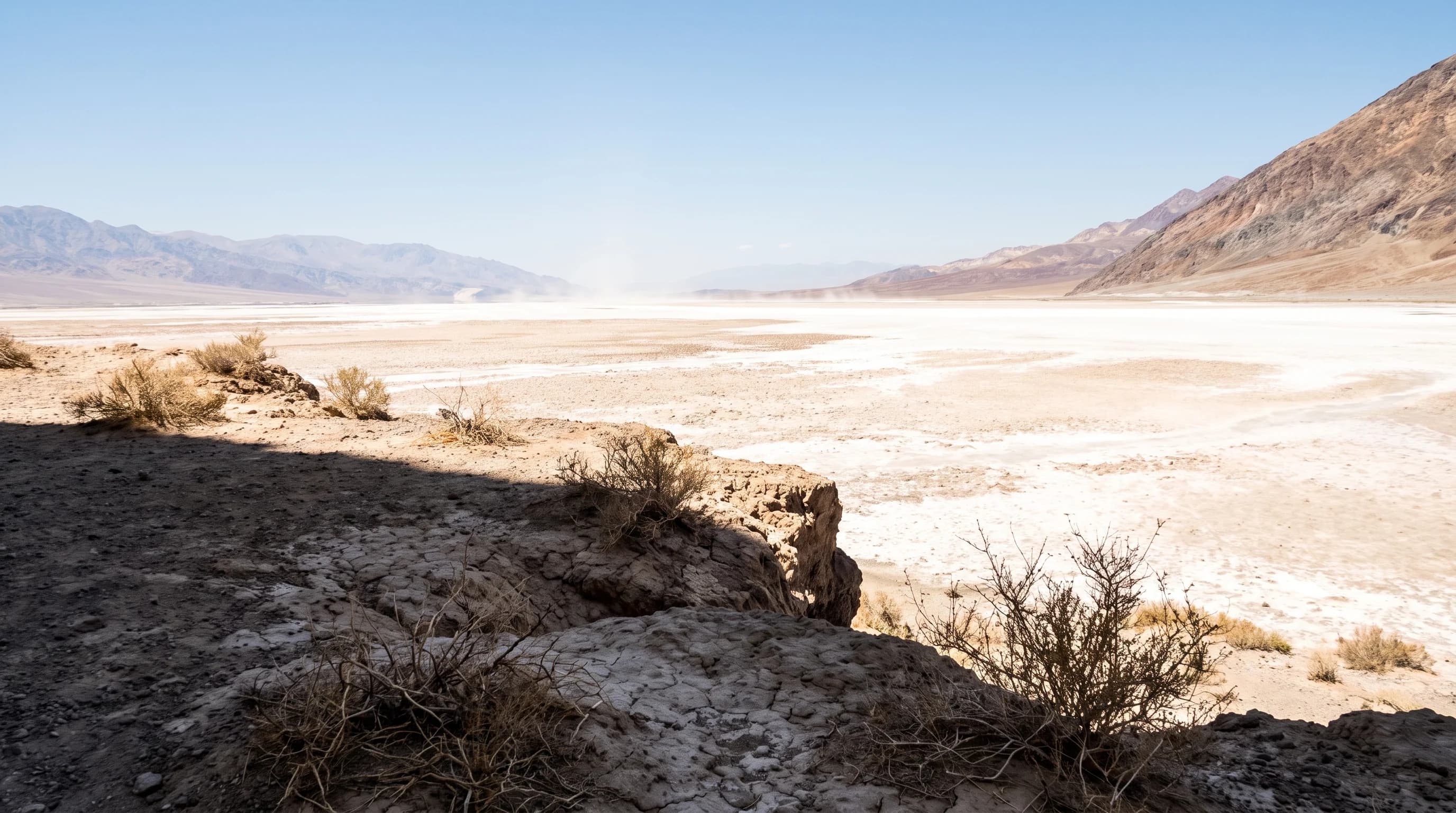
Death Valley holds the World Meteorological Organization's official record for the hottest reliably measured air temperature on Earth: 134°F at Furnace Creek on July 10, 1913. That is 13 degrees above the highest reading ever recorded in Los Angeles.
An ordinary summer defines Death Valley even more than the record. Furnace Creek averages a daily high near 116°F in July and often tops 120°F for days at a time. A basin below sea level, mountains on every side and extremely dry air make triple-digit heat the normal weather.
How Hot Does Death Valley Get?
Death Valley averages a July high near 116°F at Furnace Creek, the park's main visitor hub and long-running weather station, based on NOAA 1991-2020 climate normals. June and August are only slightly cooler, and some summers reach 125°F or hotter. The average is not a ceiling. Individual days regularly exceed it, and an ordinary hot afternoon and a dangerous one are closer than visitors expect.
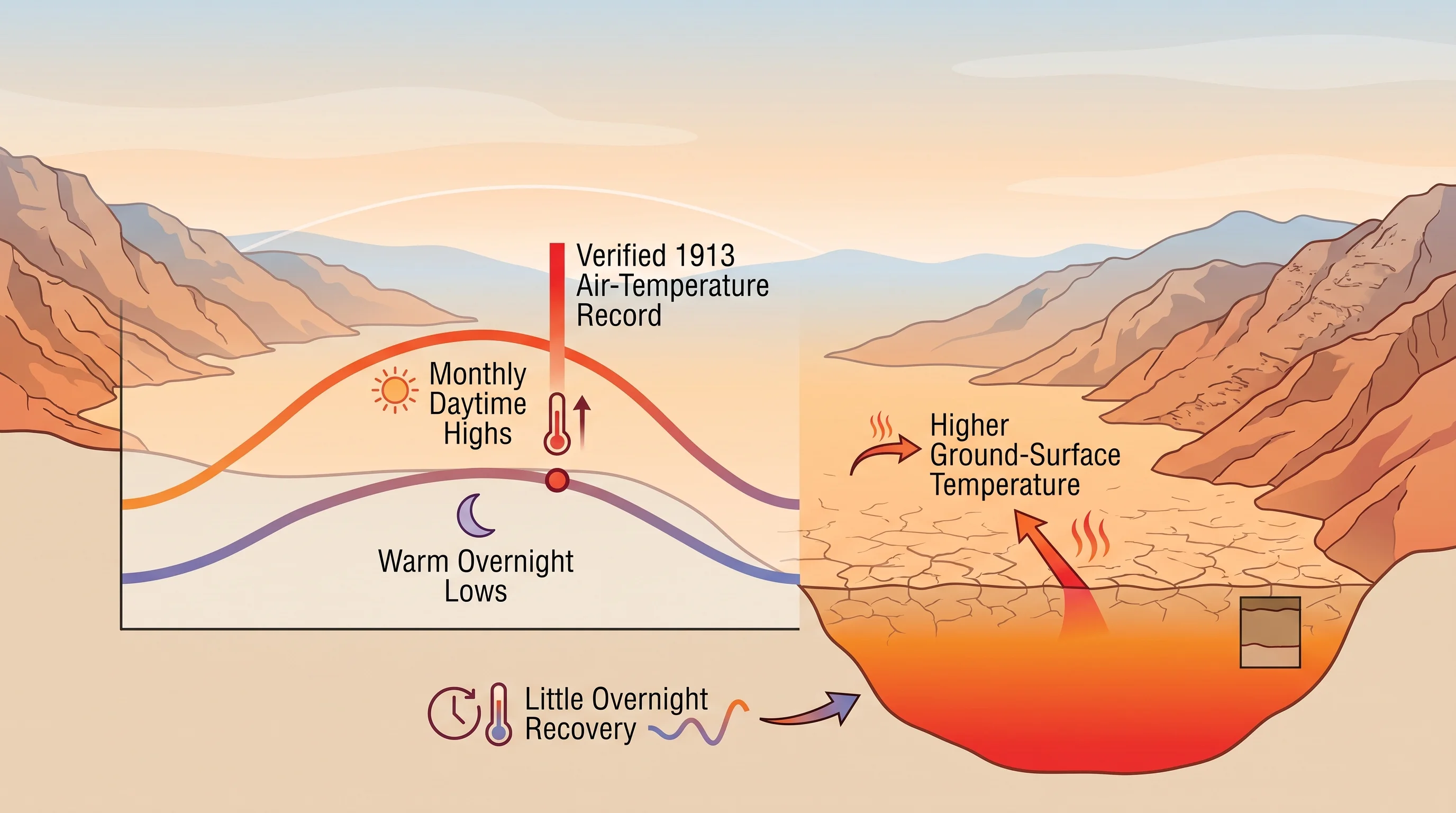
Several different numbers get called "the temperature" in Death Valley. Air temperature, used by the National Weather Service for records, is measured a few feet above the ground inside a shaded, ventilated shelter. Ground temperature on Death Valley's lowest, barest surfaces can run 40°F to 50°F hotter than the air on the same afternoon, because bare soil and rock absorb and re-radiate sunlight.
A dashboard or car interior in direct sun can pass 150°F within minutes. The heat index, or "feels like" temperature, adds the effect of humidity. Death Valley's air is so dry that its heat index stays close to the air temperature.
| Measurement | Value | Source and period |
|---|---|---|
| Average July high, Furnace Creek | About 116°F | NOAA 1991-2020 climate normals |
| Average July overnight low, Furnace Creek | About 88-90°F | NOAA 1991-2020 climate normals |
| Officially recognized world-record air temperature | 134°F | Greenland Ranch, Death Valley, July 10, 1913 (WMO) |
| Lowest elevation, Badwater Basin | 282 feet below sea level | National Park Service, Death Valley |
| Approximate ground-surface temperature on a 120°F day | 160°F or higher | National Park Service, Death Valley heat guidance |
Why Is Death Valley So Hot?
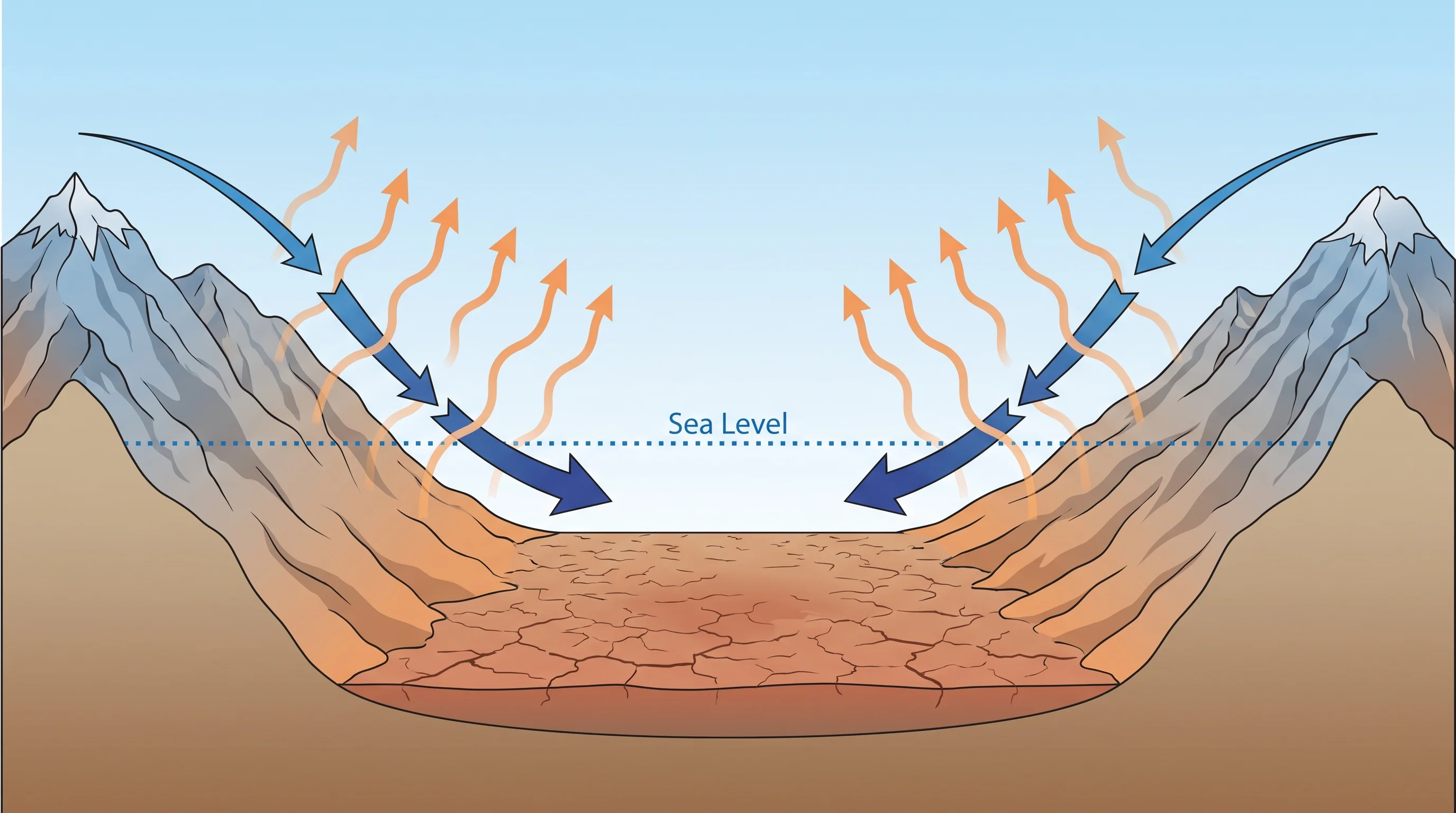
Death Valley is hot because several factors stack together. The valley floor drops to 282 feet below sea level at Badwater Basin.
Sinking air compresses and warms, and the extra depth adds heat. The Panamint Range to the west and the Amargosa Range to the east wall in the valley. They block cool ocean air and trap hot air, which rises by day and sinks back down, warming again as it compresses.
Dry air and sparse plants remove the usual buffers against heat. Evaporating water absorbs energy that would otherwise heat the air, and Death Valley averages only about 2 inches of rain a year, among the driest places in North America. Few plants shade the ground or cool the air. Clear skies let nearly full sunlight reach the desert floor on most summer days, and long summer days give the sun more hours to heat the basin.
What Is the Verified Temperature Record?
The verified record is 134°F, measured at the Greenland Ranch weather station in Death Valley, now Furnace Creek, on July 10, 1913. It remains the World Meteorological Organization's accepted record for the hottest reliably measured air temperature on Earth. Greenland Ranch was a cooperative observer station, and the reading came decades before modern instrument shelters and siting standards. Some meteorologists and climate historians question whether 1913 equipment produced an inflated reading, but the figure remains the official record.
In 2012, a WMO committee disqualified a claimed record of 136.4°F from El Azizia, Libya, in 1922, after finding problems with its instrument and observer. The same review left the Death Valley 1913 reading as the official record. Credible sources call it the verified record while noting the historical debate. Furnace Creek has since recorded some of the hottest confirmed modern readings on Earth, including temperatures at or above 130°F in recent summers, using modern instruments.
How Hot Are Death Valley Nights?
Death Valley nights rarely bring relief. Furnace Creek's average July low is about 88°F to 90°F, based on NOAA 1991-2020 climate normals, and lows have stayed above 100°F during the worst heat waves. In most hot places, even a scorching day is followed by a night cool enough for the body to recover. Death Valley's mountain-ringed basin keeps radiating heat after sunset, and the surrounding slopes slow the escape of warm air near the ground.
High overnight lows raise the risk of heat exhaustion and heat stroke, because the body gets no break to cool down. The National Weather Service's heat safety program stresses cooling off during the coolest hours, usually overnight and early morning. In Death Valley in peak summer, that cooling window is far smaller than almost anywhere else in the country. For how heat builds across Southern California, see what causes a heat wave, which covers the high-pressure systems behind the region's hottest stretches.
When Is a Summer Visit Most Dangerous?
A summer visit to Death Valley is most dangerous from about 11 a.m. to 5 p.m. Air temperature peaks then, and bare ground can run 40°F to 50°F hotter than the air. The National Park Service closes or strongly discourages several strenuous low-elevation trails in the hottest months and posts heat warnings at trailheads and visitor centers.
Vehicle breakdowns are the summer hazard park rangers warn about most. Much of Death Valley National Park is remote, with long distances between services, little or no cell coverage outside developed areas and roads far from help. A minor mechanical problem becomes life-threatening if a car overheats or breaks down miles from help in 120°F heat. The National Park Service treats vehicle readiness as a safety issue equal to carrying enough water.
How Should Visitors Plan Around Extreme Heat?
Plan a Death Valley visit around the time of day. Go in early morning or evening instead of midday, because one summer day's temperature swing can turn a pleasant hike dangerous within a few hours. The National Park Service recommends at least one gallon of water per person per day, more for hiking or other exertion. Treat that as a minimum, because dehydration comes on fast in dry heat.
Prepare your vehicle as carefully as your water supply. Start with a full tank, good tires and a mechanically sound car, and stay on paved roads instead of remote dirt routes.
On the long climbs out of the valley, Caltrans signs advise turning off air conditioning to keep the engine from overheating; watch the temperature gauge on grades. If your vehicle breaks down, stay with it, since a car is easier for rescuers to find than a person on foot. Set a firm turnaround time before any hike or backcountry drive, and keep to it.
Before entering the park in hot weather, check the Furnace Creek point forecast and any National Park Service alerts, because conditions and road status can change with little notice. A milder version of the same desert heat affects Palm Springs, which sits in its own low desert basin and posts some of the hottest readings in the Los Angeles weather region, though far below Death Valley's.
Los Angeles heat waves, from Downtown Los Angeles to Woodland Hills and Pasadena, follow related physics on a much smaller scale. For how humidity changes how dangerous a temperature is, see what is wet-bulb temperature.
Death Valley's reputation rests on ordinary summers, not just one 1913 record. A normal summer afternoon there reaches temperatures that would make headlines almost anywhere else, driven by a below-sea-level basin, mountains that trap heat and air too dry to soften it.
Before a summer trip to Furnace Creek, check the forecast, confirm your vehicle is ready and pack more water than you expect to need. If you are comparing Death Valley with a cooler Southern California trip, compare current conditions across the region on WeatherLA's Los Angeles destination pages.