air qualitywinterhealth

No-Burn Days in SoCal: What They Mean

By WeatherLA|Published |Last updated |5 min read
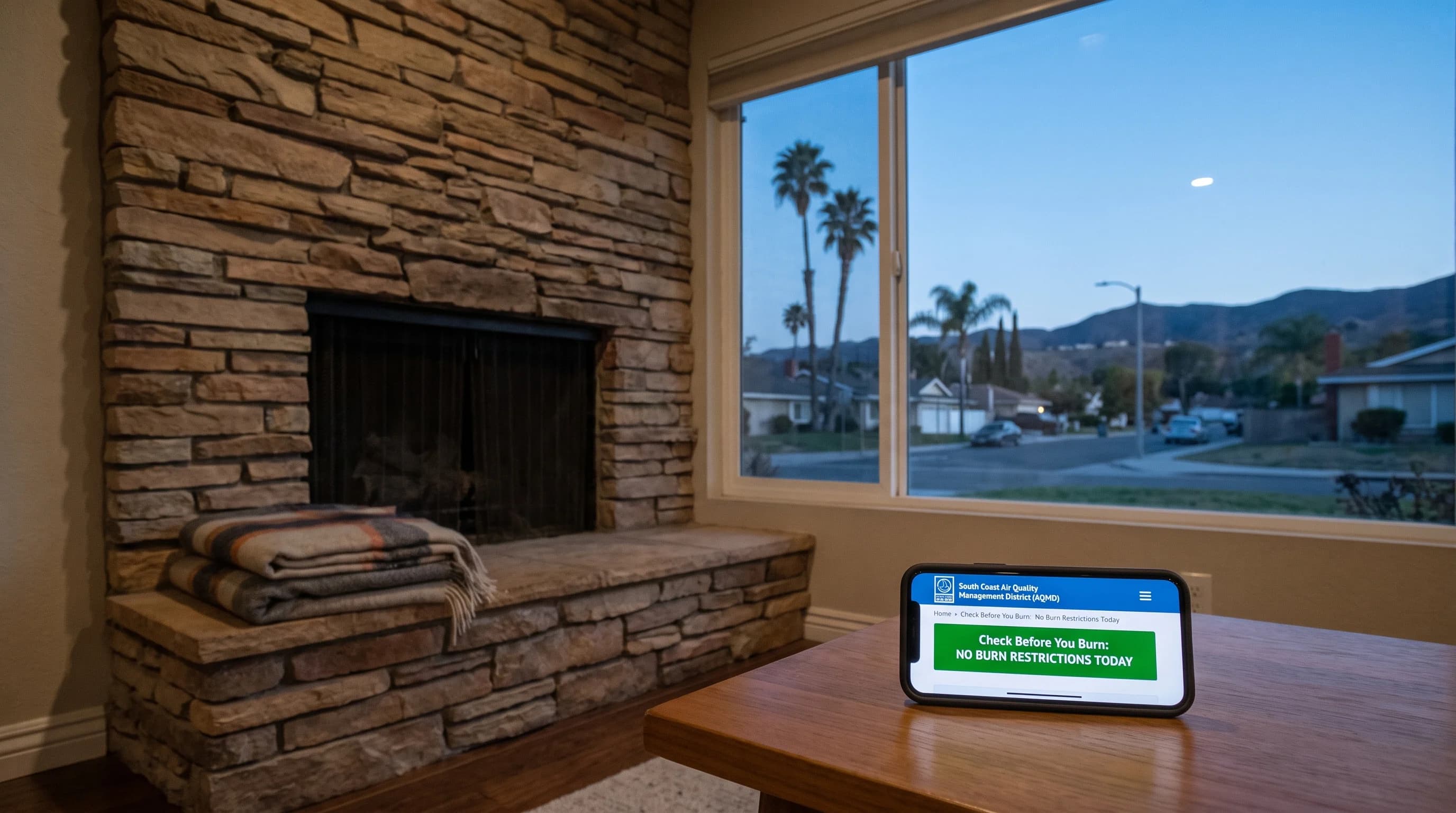
A cool Southern California evening with an unused home fireplace and a phone displaying the official Check Before You Burn status

Key Takeaways

  • A No-Burn Day is South Coast AQMD's Check Before You Burn restriction on residential fireplaces and wood stoves, separate from the Bay Area's "Spare the Air" program.
  • It is triggered by winter stagnation and temperature inversions that trap cumulative wood smoke as PM2.5, not by any active wildfire.
  • The rule applies across the South Coast Air Basin during the winter wood-burning season; confirm current season dates and daily status directly with South Coast AQMD.
  • Exemptions generally cover sole-source heating and certain qualifying low-emission devices, but exact criteria should be confirmed on South Coast AQMD's site.
  • A No-Burn Day is unrelated to a Red Flag Warning or a local fire agency's outdoor burn ban; more than one restriction can apply on the same day.
  • Check South Coast AQMD's official Check Before You Burn status before lighting a fireplace, since a cold, still evening does not automatically mean burning is allowed.

A No-Burn Day in Southern California is a South Coast Air Quality Management District restriction on residential wood burning, called Check Before You Burn, issued when forecasters expect winter weather to trap fine particle pollution close to the ground across the South Coast Air Basin. It has nothing to do with active wildfire and everything to do with wood smoke from ordinary home fireplaces and wood stoves, which becomes a meaningful source of unhealthy particle pollution when stagnant winter air keeps smoke from dispersing.

What Is a No-Burn Day?

A No-Burn Day is a rule, not a weather event: South Coast AQMD's Check Before You Burn program restricts the use of residential wood-burning devices, fireplaces and wood stoves, on days when meteorologists forecast that particle pollution will build to unhealthy levels across the South Coast Air Basin. This program is Southern California's own regional air district rule and is separate from the Bay Area's similarly purposed "Spare the Air" program; the two districts run their own independent winter wood-smoke restrictions under different names.

Why Restrict Fireplaces When No Wildfire Is Burning?

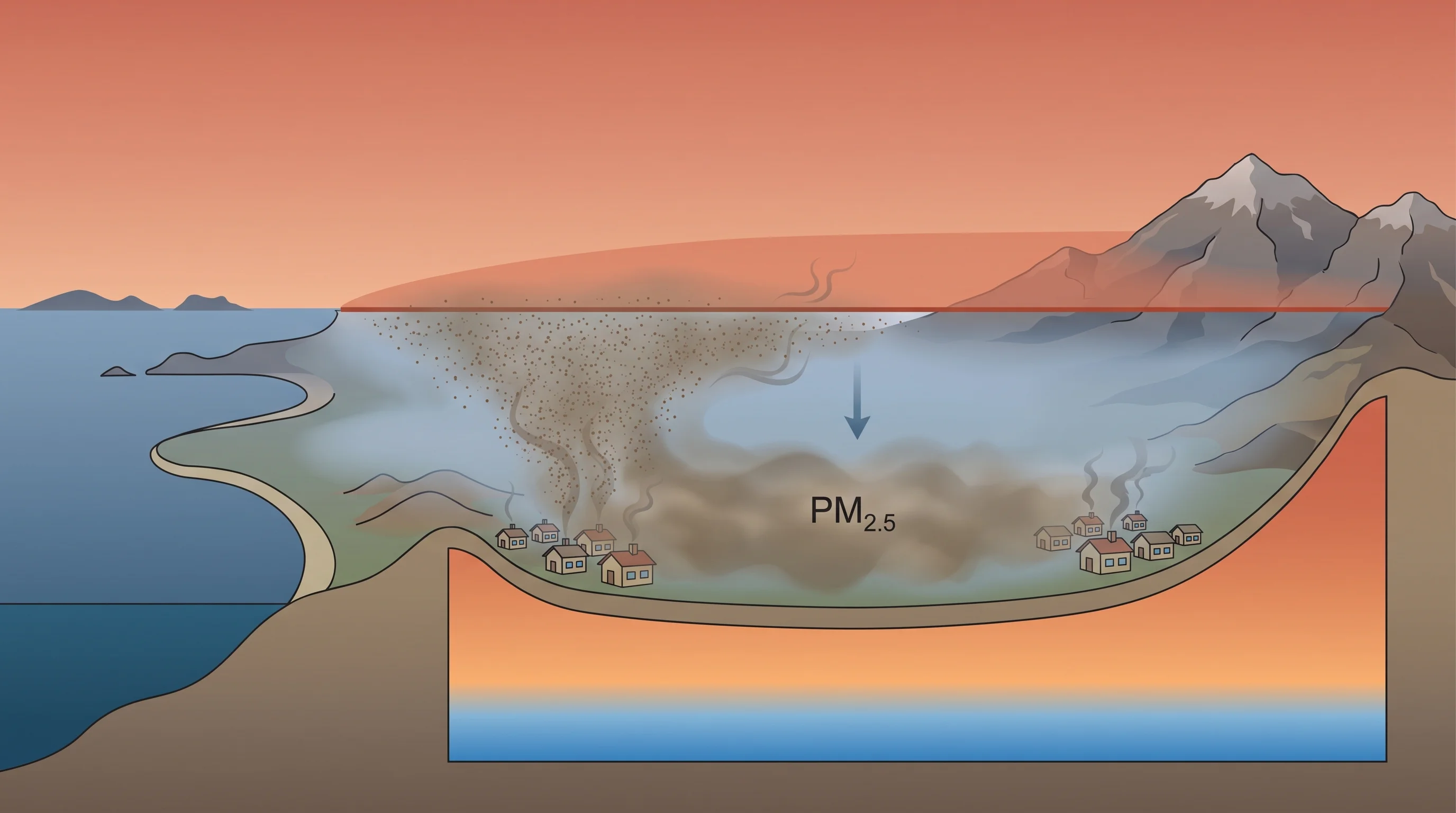
Fireplaces get restricted on calm winter days because the same stagnant weather pattern that makes for a still, quiet evening also traps smoke close to the ground instead of letting it disperse. On clear, cold, calm nights, a temperature inversion, a layer of warm air sitting above cooler surface air, can cap the atmosphere over the South Coast Air Basin and prevent the usual vertical mixing that carries pollution away. Wood smoke is a significant source of fine particulate matter, PM2.5, and when thousands of homes across the basin burn wood on the same still night, the cumulative smoke can push particle pollution to unhealthy levels even with no wildfire anywhere nearby.

This is a distinct mechanism from the wildfire-driven smoke events covered in what is PM2.5, the tiny particles in LA's wildfire smoke. A No-Burn Day is about cumulative residential wood smoke concentrating under a winter inversion, not smoke from an active fire.

Winter temperature inversion diagram showing residential fireplace smoke accumulating as PM2.5 beneath a shallow mixing layer across the South Coast Air Basin on a calm, clear night
On calm winter nights, a temperature inversion can cap the South Coast Air Basin and trap residential wood smoke close to the ground, building PM2.5 to unhealthy levels.

Where and When Does the Rule Apply?

South Coast AQMD's Check Before You Burn program applies across the South Coast Air Basin, which covers most of the Los Angeles metropolitan area, during the winter wood-burning season when stagnant conditions and elevated PM2.5 are most likely. The exact season dates and the specific forecast criteria that trigger a mandatory No-Burn Day can be adjusted by the district, so the current season dates and the day's status should always be confirmed directly against South Coast AQMD's official Check Before You Burn page rather than assumed from a fixed calendar.

Because the program is tied to basin-wide winter stagnation rather than a specific destination, the rule applies the same way whether you are near Downtown Los Angeles, Pasadena, or Woodland Hills, provided your location sits within the South Coast Air Basin covered by the program.

Which Homes or Devices May Be Exempt?

South Coast AQMD's rules include specific exemptions, generally covering households where a wood-burning device is the sole source of adequate heat and certain qualifying low-emission devices that meet the district's cleaner-burning standards. The exact exemption criteria and which devices qualify can change as the district updates its rule, so anyone who believes they may qualify for an exemption should confirm the current, specific criteria directly on South Coast AQMD's website rather than relying on a general description. An exemption is a legal allowance to burn under the district's rule; it is not the same as a statement that burning on a given day is healthy for the surrounding neighborhood's air quality.

Is a No-Burn Day a Fire-Weather Alert?

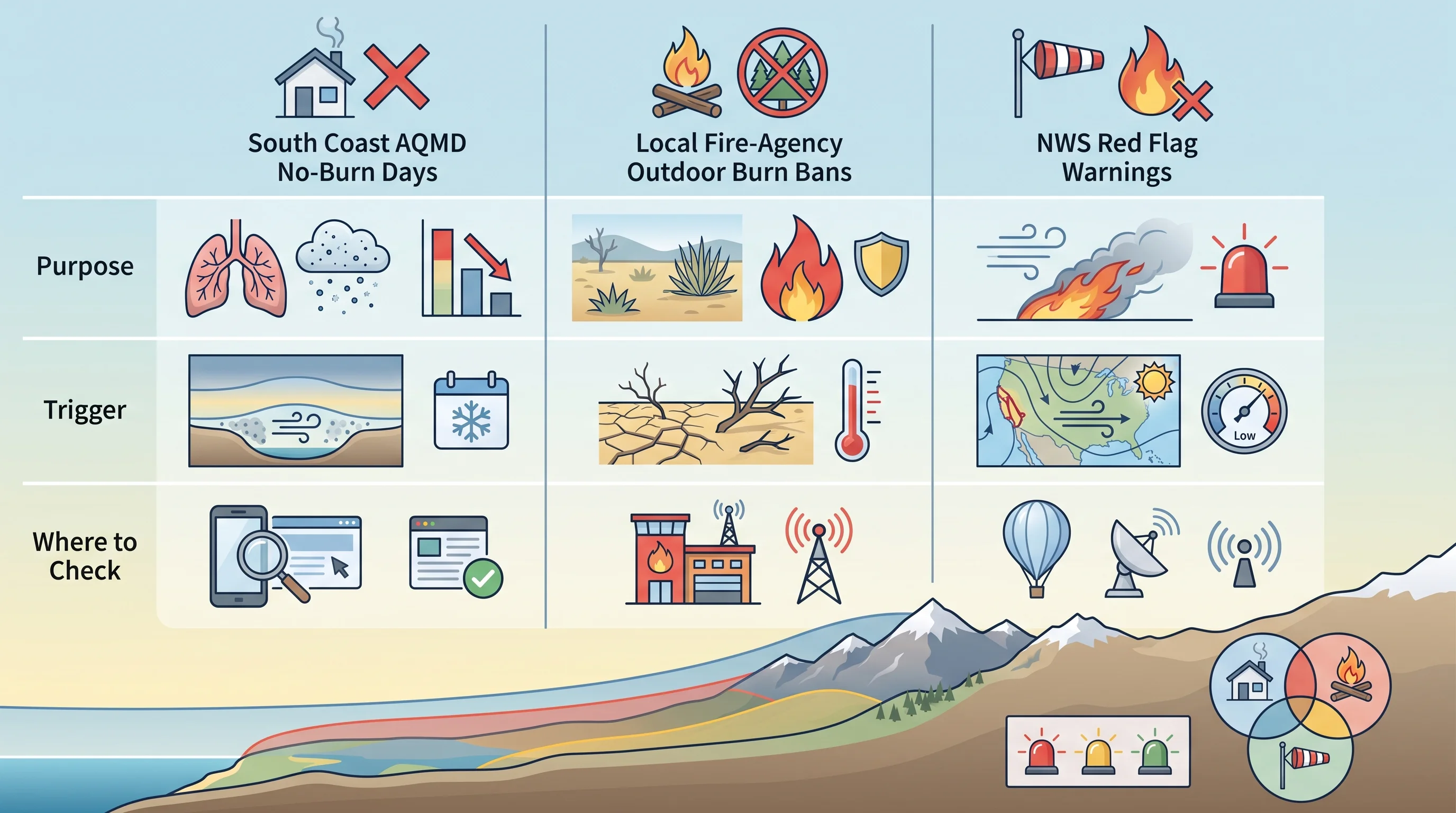
No. A No-Burn Day is an air-pollution regulation focused on cumulative wood-smoke particulates, entirely separate from fire-weather products like a Red Flag Warning, which NWS issues when conditions favor rapid wildfire spread, or a local fire agency's burn ban, which restricts outdoor burning because of wildfire danger from dry vegetation and wind. More than one of these restrictions can be in effect on the same day for entirely different reasons, so checking a fire-weather alert does not tell you whether a No-Burn Day is also active, and checking Check Before You Burn status does not tell you whether a Red Flag Warning is in effect.

No-Burn Day vs. Outdoor Burn Ban vs. Red Flag Warning
ProductIssued byPrimary purposeWhat to check
No-Burn DaySouth Coast AQMDReduce residential wood smoke and PM2.5Check Before You Burn status and any exemptions
Outdoor burn banLocal fire agency or jurisdictionPrevent wildfire ignitionCurrent local restrictions and permit rules
Red Flag WarningNational Weather ServiceWarn of weather favoring rapid fire spreadWarning polygon, valid time, wind, and humidity
Comparison chart separating South Coast AQMD No-Burn Days, local fire-agency outdoor burn bans, and NWS Red Flag Warnings by purpose, trigger, and where to check current status
A No-Burn Day, a local outdoor burn ban, and a Red Flag Warning are three separate restrictions with different purposes, and more than one can apply on the same day.

How Do Residents Check Today's Status?

The only reliable way to know whether today is a No-Burn Day is to check South Coast AQMD's official Check Before You Burn status directly, since the district issues and updates this status daily during the winter season based on the current forecast. AirNow and South Coast AQMD both publish the current PM2.5 AQI reading for monitoring stations across the basin, which is useful context alongside the burn status but is not the same official source as the Check Before You Burn determination itself. For a broader walkthrough of how to read the AQI scale across every tracked pollutant, see AQI explained for Southern California, and for the separate daytime ozone pattern that also affects the basin's air quality, see ground-level ozone in Southern California.

Before lighting a fireplace or wood stove on a cold Southern California evening, check South Coast AQMD's current Check Before You Burn status for your area and the day's PM2.5 forecast, rather than assuming that a chilly, still evening automatically means burning is allowed. WeatherEscape's Los Angeles resources can help you track the day's air quality conditions, but the official Check Before You Burn determination from South Coast AQMD should always be the final word on whether burning is restricted.

Frequently Asked Questions

What is a No-Burn Day?

A No-Burn Day is South Coast AQMD's Check Before You Burn restriction on residential wood-burning devices, issued when forecasters expect winter weather to trap particle pollution across the South Coast Air Basin. It has nothing to do with active wildfire.

Why restrict fireplaces when no wildfire is burning?

Calm, clear winter nights often bring a temperature inversion that traps smoke close to the ground instead of letting it disperse. Wood smoke is a significant source of fine particulate matter, and thousands of homes burning wood on the same still night can push PM2.5 to unhealthy levels basin-wide, even with no wildfire nearby.

Where and when does the No-Burn Day rule apply?

The rule applies across the South Coast Air Basin during the winter wood-burning season, when stagnant conditions and elevated PM2.5 are most likely. Exact season dates and forecast criteria can be adjusted by the district, so confirm current details directly on South Coast AQMD's Check Before You Burn page.

Which homes or devices may be exempt from a No-Burn Day?

Exemptions generally cover households where a wood-burning device is the sole source of adequate heat and certain qualifying low-emission devices. Exact criteria can change, so confirm current exemption details on South Coast AQMD's website rather than assuming a general exemption applies.

Is a No-Burn Day a fire-weather alert?

No. A No-Burn Day is an air-pollution regulation about cumulative wood smoke, separate from a Red Flag Warning, which NWS issues for wildfire spread risk, or a local fire agency's outdoor burn ban. More than one restriction can be active on the same day for different reasons.

Why do Southern California no-burn days focus on wood smoke and PM2.5?

Wood smoke is a major contributor to fine particulate matter, PM2.5, which is small enough to lodge deep in the lungs. On stagnant winter days, cumulative residential wood smoke across the basin can push PM2.5 to unhealthy levels, which is the specific pollutant and source the Check Before You Burn program targets.

Can I use a fire pit during a Southern California No-Burn Day?

Outdoor fire pits and other wood-burning appliances can be subject to the same Check Before You Burn restrictions as an indoor fireplace, depending on South Coast AQMD's current rule. Confirm whether outdoor devices are covered on South Coast AQMD's official page before using one on a restricted day.

Related Destinations

Live Los Angeles Conditions

Compare temperature, wind, clouds, and comfort across the map.

See which microclimates are clear, cool, windy, smoky, or warming up right now.

Open the Weather Map
Destinations☀️Smog Forecast🌫️Smog Heat Map🔒Privacy Policy📄Terms of Service