tipsrainfallsafety

Is It Illegal to Collect Rainwater in California?

By WeatherLA|Published |Last updated |6 min read
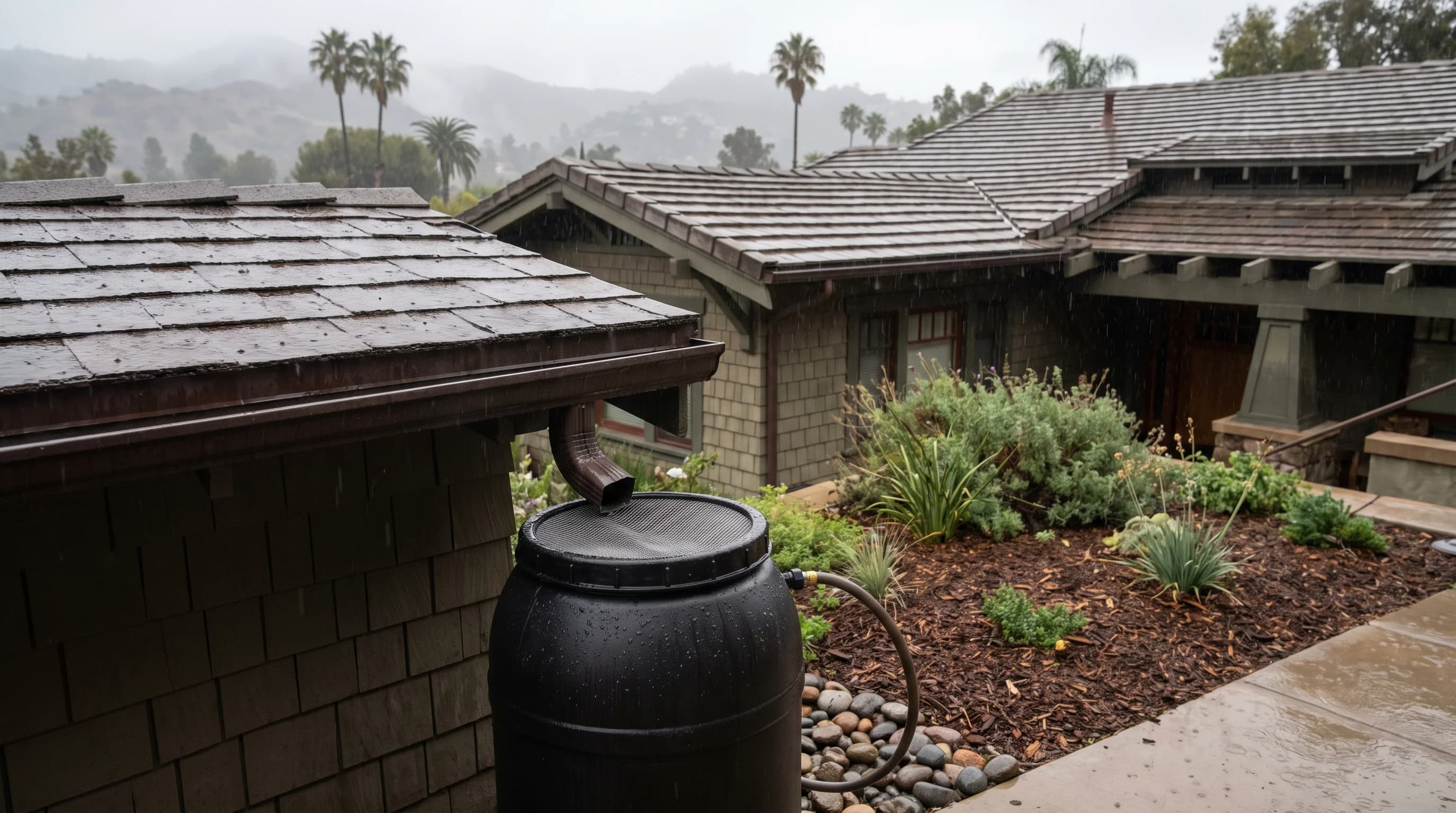
A Southern California home during light rain with gutters feeding a screened rain barrel, with overflow directed into a landscaped area

Key Takeaways

  • Collecting rainwater from your own roof for non-commercial use is legal in California, unlike some Western states with stricter historical water-rights rules.
  • A simple rain barrel is the least regulated option; larger cisterns and whole-property catchment systems are more likely to require permits or plumbing work.
  • Cross-connection protection is typically required once a system connects to household plumbing, to keep collected rainwater separate from the potable supply.
  • Collected rainwater is generally intended for nonpotable uses like irrigation; using it as drinking water requires health-code treatment and testing this article does not cover.
  • Rooftop rain capture is governed differently than taking water from a stream or river, which generally falls under California water rights and can require a permit.
  • Confirm permit requirements, mosquito prevention, overflow routing, and any water-provider rebate with your local building department before installing a system.

Collecting rainwater from your roof is legal in California. Unlike some Western states that historically restricted rainwater capture under strict prior-appropriation water rights doctrines, California law generally treats rooftop precipitation capture for non-commercial use as allowed, though the size and design of your system, your intended use for the water, and your local city or county rules can still bring in permit, plumbing, or building-code requirements. The short version: catching what falls on your own roof is not illegal, but a bigger or more complex system may still need local sign-off.

Yes, collecting rainwater that falls on your own rooftop for non-commercial residential use is legal in California under the Rainwater Capture Act provisions in Water Code sections 10570–10574. This distinguishes California from an older legal tradition in parts of the western United States, where rainwater and surface water were treated as already allocated under prior-appropriation water rights systems, making rooftop capture a legal gray area in some jurisdictions. California's approach to rooftop precipitation is meaningfully more permissive than that older framework, though this article is not a substitute for a licensed attorney's review of your specific project and current statute text, particularly since water law details can change and vary by local jurisdiction.

What Systems Can a Homeowner Install?

Homeowners generally have three tiers of system to choose from, each with a different level of complexity and a different likelihood of triggering local requirements. A simple rain barrel connected to a downspout, holding a modest volume for garden irrigation, is the most common and least regulated option. A larger cistern, whether above ground or buried, stores significantly more water and may involve more substantial plumbing, structural, or electrical work depending on its size and any pump system attached to it. A professionally designed rainwater-catchment system, intended to supply water for multiple uses around a property, typically involves the most extensive plumbing, filtration, and sometimes cross-connection protection to keep the collected water separate from the potable water supply.

Rainwater Collection Systems: What Typically Changes
System typeTypical scaleWhat to check locally
Simple rain barrelOne downspout, garden useUsually minimal, but confirm with your local building department
Larger cisternAbove ground or buried, larger volumePossible structural, electrical, or plumbing permit
Whole-property catchment systemMultiple uses, filtration, pumpsPlumbing permit and cross-connection control likely required

This is a general scale, not a fixed legal threshold. No universal statewide volume or size cutoff separates a permit-free project from a permitted one; the specific answer depends on your local building department and water provider, covered in the next section.

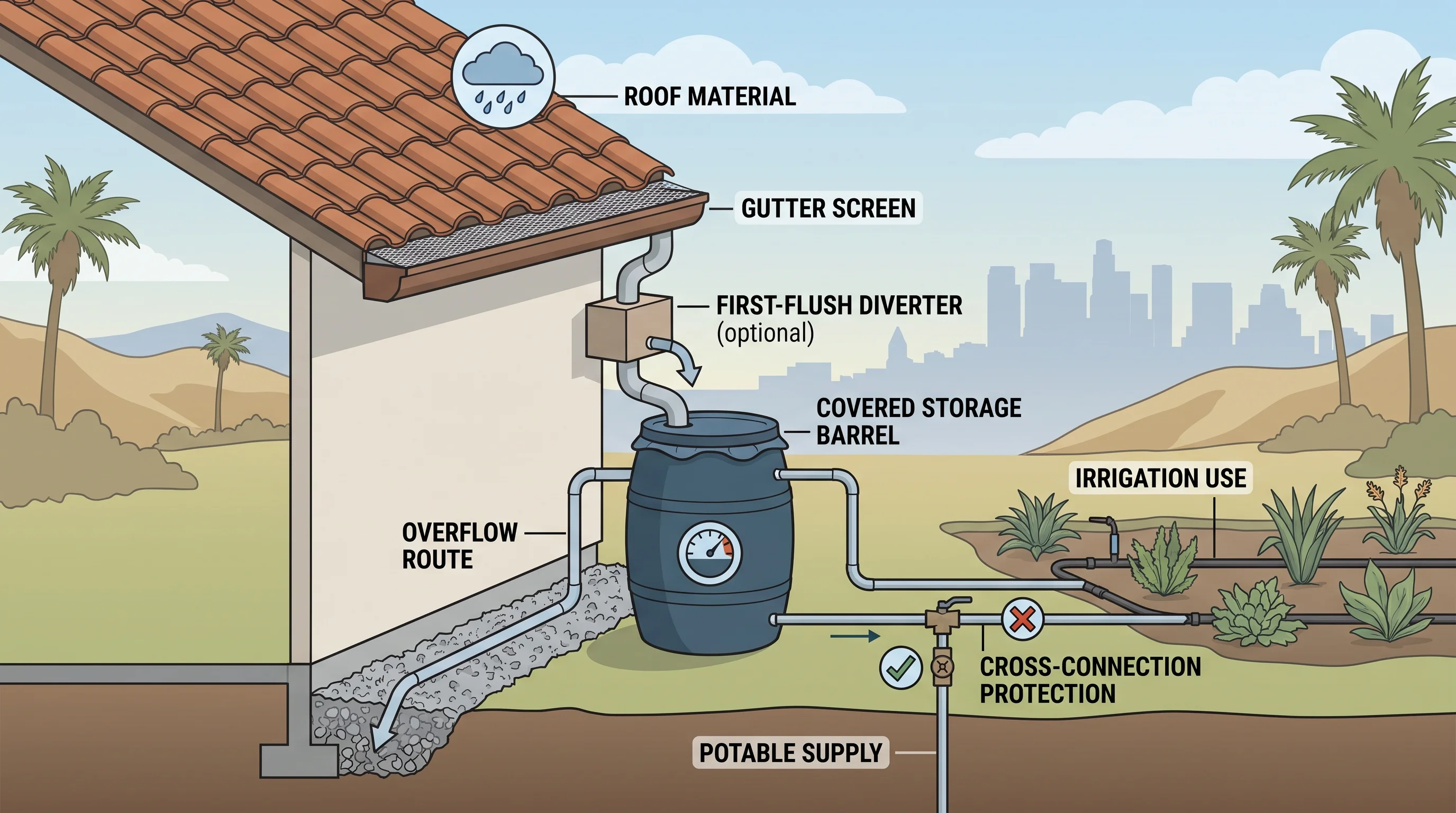
Rooftop rainwater catchment diagram labeling the roof material, a gutter screen, an optional first-flush diverter, a covered storage barrel or cistern, an overflow route, irrigation use, and cross-connection protection separating it from the potable supply
A basic rooftop catchment system routes gutter runoff through a screen and optional first-flush diverter into covered storage, with overflow directed safely away from the foundation.

When Can Permits or Local Codes Apply?

Permits and local codes typically come into play once a project involves structural changes, new plumbing connections, electrical work for a pump, or a large enough storage volume that your local building department classifies it differently from a simple rain barrel. Cross-connection control, keeping a rainwater system physically separated from your home's potable water supply so the two can never mix, is a common requirement once a system connects into household plumbing at all. Many California cities and water agencies also require basic mosquito-prevention measures, such as a sealed or screened storage container, for any standing water collection system.

Because these requirements vary by city, county, and local water provider, the only reliable way to confirm what applies to a specific project is to contact your local building department and water agency directly before installation, rather than relying on a general statewide answer. Some Southern California water providers also offer rebates for rain barrels or cisterns as part of broader water-conservation programs, which is worth checking alongside any permit question. The California Department of Water Resources also summarizes rainwater-harvesting considerations in its Model Water Efficient Landscape Ordinance guidebook.

Can Collected Rainwater Be Used for Drinking?

Collected rooftop rainwater is generally intended and permitted for nonpotable uses, such as landscape irrigation, without special treatment. Using it as drinking water is a different matter entirely, since potable water is subject to health-code treatment, testing, and monitoring requirements that a typical residential rain barrel or cistern does not meet. This article does not provide do-it-yourself treatment instructions; anyone considering a rainwater system intended for drinking or other potable use should consult their local health department and a qualified water-treatment professional, since the requirements are substantial and safety-critical.

How Is Rain Capture Different From Taking Water From a Stream?

Rooftop rainwater capture and taking water from a stream, river, or other surface water source are governed by different legal frameworks, and conflating the two is a common source of confusion. Precipitation that falls directly on your own roof and is captured there is treated differently from surface water, which is generally subject to California's water rights system and can require a permit or existing water right to divert, even in small amounts, depending on the source and location. The common claim that California broadly bans "collecting rain" typically stems from a misunderstanding or overgeneralization of these separate rules, or a reference to older water-rights doctrines used elsewhere in the West; it does not accurately describe current California law for ordinary rooftop rainwater capture.

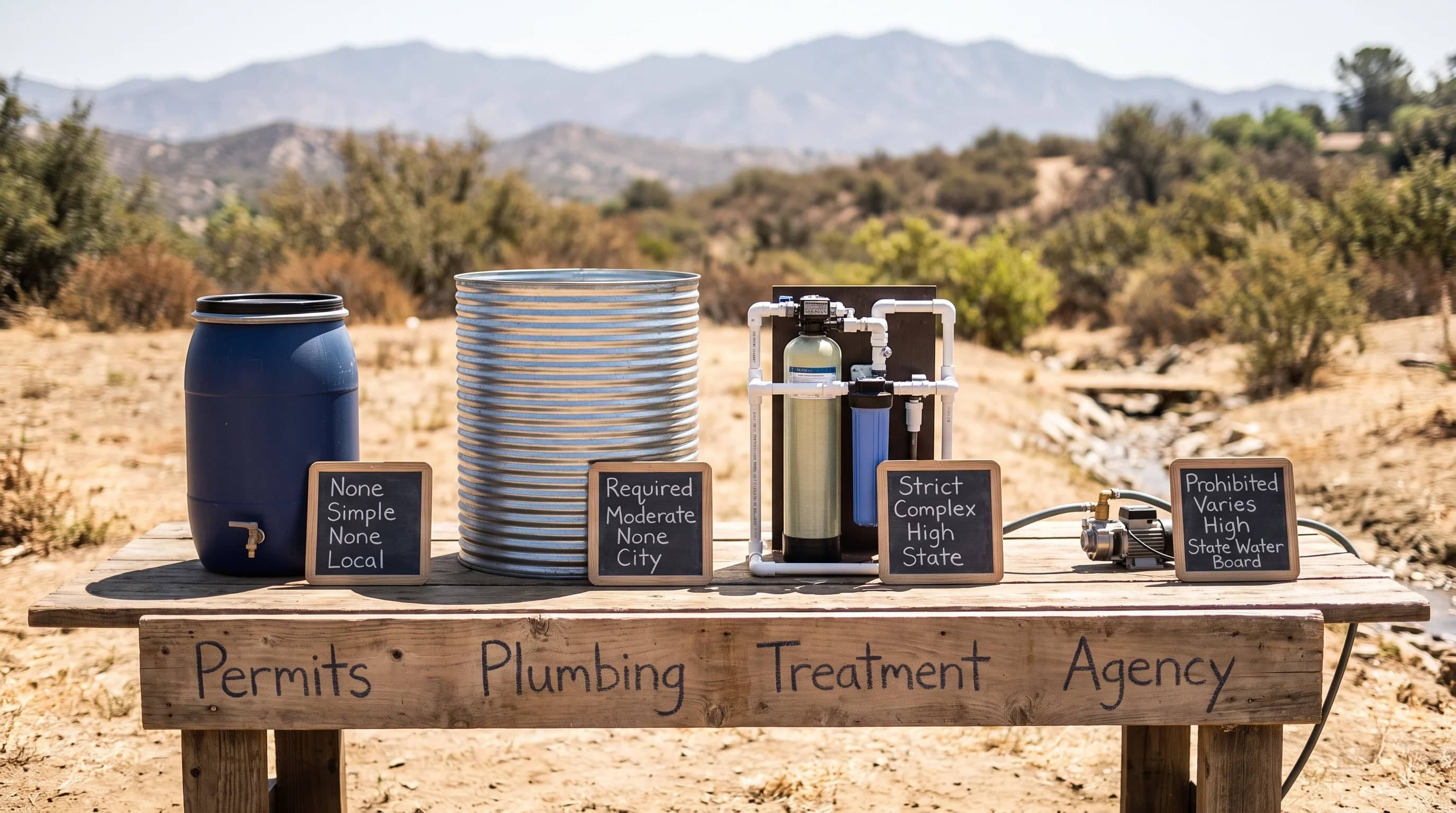
Decision table comparing a simple rain barrel, a larger cistern, a proposed potable-use system, and stream water diversion across permits required, plumbing complexity, treatment needs, and the responsible local or state agency
Rooftop rainwater capture, larger storage systems, potable-use proposals, and surface-water diversion each sit under different rules and different responsible agencies.

What Should a Southern California Owner Verify First?

Before installing any rainwater collection system, confirm your roof material is suitable for the intended use, since some roofing materials and coatings are not recommended for water destined for edible-garden irrigation. Confirm your storage container is fully covered or screened to prevent mosquito breeding, plan a clear overflow path that directs excess water away from your foundation and neighboring properties rather than letting it pool, and check whether your local water provider offers a rebate for the system you are considering. Confirm with your city or county building department whether your specific project requires a permit, and if the system will connect to household plumbing in any way, confirm that cross-connection protection is properly installed.

Heavy rain events that fill a rainwater system quickly are often the same storms that raise broader flood and runoff risk across the region, covered in how atmospheric rivers drench Southern California, and severe thunderstorms during a rain event can bring their own hazards, covered in lightning safety in Southern California and how hail forms and when LA sees it. Check your city or county building rules, your water provider's rebate program, your intended use, your overflow path, and mosquito-control requirements on WeatherEscape's Los Angeles resources and your local agency's website before installing a capture system, and treat any specific legal question as one for your local building department or an attorney rather than this article.

Frequently Asked Questions

Is it legal to collect rainwater in California?

Yes, collecting rainwater that falls on your own rooftop for non-commercial residential use is legal in California, unlike some Western states with older, stricter water-rights traditions. System size, intended use, and local building codes can still bring in permit or plumbing requirements, so this is not a blanket exemption from all local rules.

What systems can a homeowner install?

Options range from a simple rain barrel connected to a downspout for garden irrigation, to a larger above-ground or buried cistern, to a professionally designed whole-property catchment system with filtration and multiple uses. Complexity and the likelihood of needing a permit generally increase with system size and how it connects to household plumbing.

When do permits or local codes apply to a rainwater system?

Permits typically apply once a project involves structural work, plumbing connections, electrical work for a pump, or a storage volume your local building department treats differently from a simple barrel. Cross-connection control and mosquito-prevention measures are common requirements once a system connects to plumbing or holds standing water.

Can collected rainwater legally and safely be used for drinking in California?

Collected rooftop rainwater is generally intended for nonpotable uses like irrigation without special treatment. Using it as drinking water requires health-code treatment, testing, and monitoring that a typical residential system does not meet, so anyone considering potable use should consult their local health department and a qualified water-treatment professional.

How can Los Angeles residents keep rain barrels from becoming mosquito habitat?

Use a fully covered or tightly screened storage container so mosquitoes cannot access standing water to lay eggs, and empty or maintain the system regularly. Many California cities and water agencies require this kind of mosquito prevention for any residential rainwater collection system.

How much rainwater can I collect in California?

There is no single statewide volume cutoff separating a permit-free project from one that needs local approval; the answer depends on your city or county building department and local water provider. Check with them directly before installing a system larger than a simple rain barrel.

Can rainwater be used for flushing toilets?

Using collected rainwater for toilet flushing generally involves plumbing connections to your home, which typically requires proper cross-connection protection and may require a permit depending on your local code. Confirm the specific requirement with your local building department before connecting a rainwater system to interior plumbing.

Related Destinations

Live Los Angeles Conditions

Compare temperature, wind, clouds, and comfort across the map.

See which microclimates are clear, cool, windy, smoky, or warming up right now.

Open the Weather Map
Destinations☀️Smog Forecast🌫️Smog Heat Map🔒Privacy Policy📄Terms of Service